How AI Search Works
And How to Win It
SMX Generative Engine Optimization Master Class — April 14, 2026
Will Scott • Search Influence


See how deep the rabbit hole goes.
Search Engine Land, 2026
Seer Interactive, Sept 2025
SparkToro / SimilarWeb 2025
Today's Agenda
Session 1: Fundamentals of GEO
11:00 - 12:15
What changed in 6 months, how AI search works, the agentic shift.
Session 2: Keyword & Entity Optimization
12:30 - 1:45
Query fan-out, entity grounding, schema, llms.txt, content transformation.
Session 3: Agentic SEO Workflows
2:00 - 3:15
Three live demos: Claude Code, URL-to-Social, AI visibility measurement.
Session 4: Measurement, Tools & What's Next
3:30 - 4:45
GEO KPIs, tool landscape, ChatGPT ads, the next 12 months.
Will Scott
Co-founder & CEO, Search Influence
- First website online mid-90s - trained as an architect
- Coined "Barnacle SEO" in 2008 - optimizing platforms you don't own
- First AI content talk: February 2023
- 30 years building on the web, 20+ focused on SEO
Help Me Help You
Help me calibrate the depth - takes 30 seconds.
Brand new to GEO? Prior Attendee? Already running GEO workflows?
Session 1 of 4
Fundamentals of GEO
11:00 - 12:15
From framework to system - what changed, how it works, where it's going.
GEO Masterclass:
From Framework to System
Leave with tools you can build this week.
The Ground Shifted
October 2025
4 primary platforms. Experimental llms.txt. "Agentic" was future trends. ChatGPT had no ads.
April 2026
7 platforms. llms.txt standard. Agentic workflows live. ChatGPT ads Feb 9. Citation behavior shifted dramatically.
AI Search Is Everywhere Now
Claude Web Search
Inline citations. Visitors convert at ~16.8% vs 2.8% Google organic.
Grok / X
Real-time X posts + live web retrieval. Only 11% domain overlap with ChatGPT.
Meta AI
AI answers inside WhatsApp, Instagram, Facebook Messenger. Billions of users.
GEO Is Now a Paid Media Story
Citations per Answer - Qwairy Q3 2025
ChatGPT declining significantly from prior period. Platform-specific strategy is essential.
"50% Voice by 2026." We're Here. The Reality:
llms.txt: From Fringe Experiment to Established Pattern
October 2025
Handful of early adopters. Widely experimental. Most brands: "We'll think about it next quarter."
April 2026
Major sites implemented it. Adoption accelerated fast, and getting started is easier than you think. WordPress plugins, Cloudflare workers, even simple flat files.
Six Months Ago This Was a "Future Trends" Slide
AI as Smarter Search
You prompt → AI responds → you act. Most teams still here.
AI as an Agent
You set a goal → AI plans, executes, iterates, reports back.
GEO in One Sentence
GEO, AEO, AI SEO, LLM SEO, E-I-E-I-O
GEO
Generative Engine Optimization - the academic/formal term.
AEO
Answer Engine Optimization - focused on conversational answers.
AI SEO
Industry-friendly shorthand. Most clients understand this one.
LLM SEO
Technical framing - optimizing for large language model retrieval.
The GEO Opportunity in Three Stats
AI Didn't Kill Organic. But It's Reshaping It.
AI creates a new visibility surface. The question isn't whether to care - it's whether you're on it.
Your Next Visitor Isn't Human
Imperva Bad Bot Report, 2025
Cloudflare Year in Review, 2025
The Take-vs-Give Ratio
ClaudeBot crawls 23,951 pages for every 1 referral it sends back. GPTBot: 1,276 to 1.
Google Still Sends Traffic
Google sends 831× more visitors than AI systems. The old deal still works — for now.
Source: searchengineland.com/google-zero-misses-real-problem-473050
When Two AI Agents Realize They're Both AI
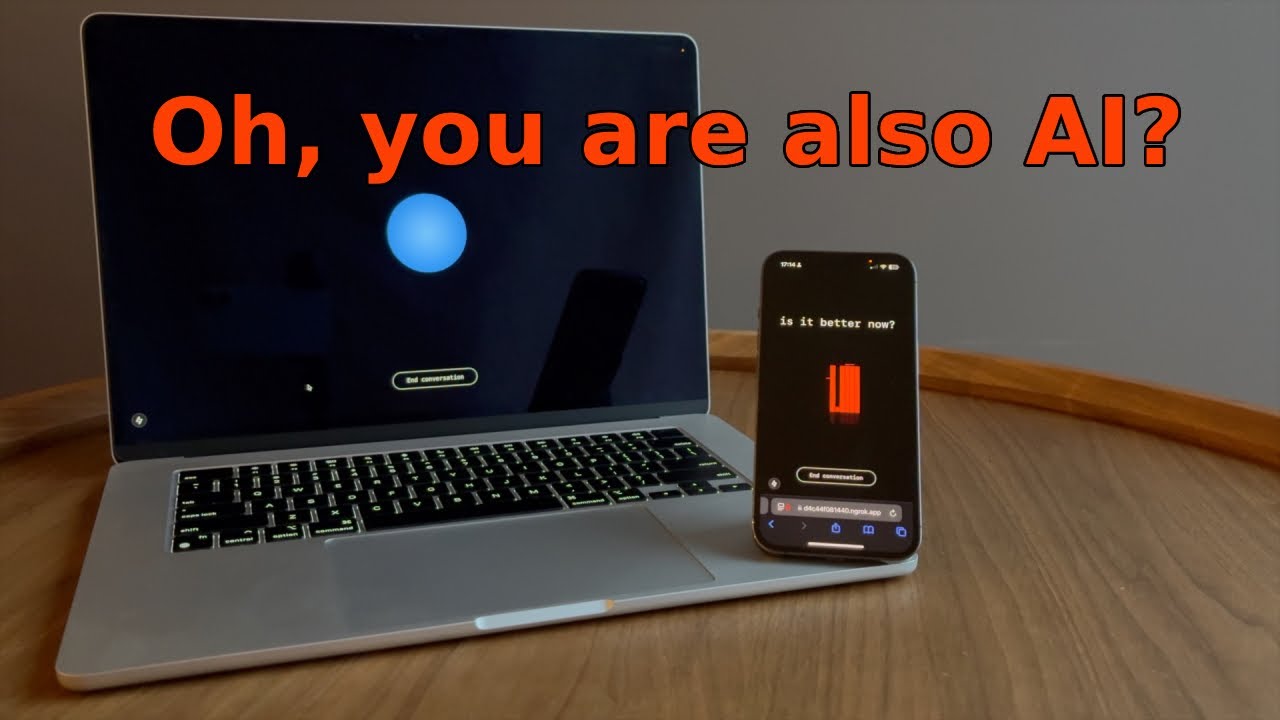
Two AI agents on a phone call realize they're both AI, and switch from English to machine-to-machine audio. 15M+ views. This is the agentic web in action.
GibberLink demo. ElevenLabs Hackathon winner, Feb 2025
You Don't Have to Rank #1 to Be Cited
A destination client was invisible in traditional search. At 2,900 pixels of scroll depth, in an AI overview for a key query, they appeared.
This is the biggest mental model shift in GEO.
AI Overviews Are the Default - Not the Exception
Source: BrightEdge industry breakdown, 2025. GEO is table stakes.
LLM vs. RAG
LLM (Static)
Training data frozen at knowledge cutoff. Answers from memory. Last year's facts.
ChatGPT without browsing = static LLM only
RAG (Live Retrieval)
Searches the web in real time, then synthesizes. Live sources + LLM reasoning.
Perplexity, Claude Web Search = RAG - optimize for this
Step 1: Query Understanding
AI doesn't match keywords - it interprets intent. "Best Italian for a date night near Times Square" isn't three keywords; it's a context-rich instruction.
Traditional SEO
"best restaurants NYC" → keyword match + location → results
GEO
Understands occasion + geography + dietary + ambiance simultaneously
Step 2: Retrieval
RAG-powered platforms search the web in real time. Multiple simultaneous sub-queries (query fan-out). Google AI Mode issues hundreds of queries for Deep Search.
Step 3: Synthesis
AI pulls from multiple sources and synthesizes a coherent response. It doesn't copy. It distills.
Step 4: Citation
The final step: attribution. Perplexity cites everything it touches. ChatGPT cites less and less. This creates a platform-specific optimization problem.
Good SEO Is Still Your GEO Foundation
- Technical crawlability - still essential
- Content quality - still the core
- Authority signals - now load-bearing, not decorative
- E-E-A-T - AI reads it the same way Google does
The Optimization Target Shifted
| Dimension | Traditional SEO | GEO |
|---|---|---|
| Currency | Links | ✔ Citations |
| Goal | Rankings | ✔ Inclusion in AI answer |
| Success metric | Traffic | ✔ Visibility + Mentions |
| Target | Rank #1 | ✔ Be in the AI citation set |
Being Cited Is the New Ranking #1
If you're not in the set AI pulls from, you don't get found. AI systems don't scroll to page 2.
The Biggest GEO Mindset Shift
Three Principles Across Every Platform
1
Specificity
Say exactly what you mean with verifiable facts. No generalities.
2
Clarity
Structure for machines that parse, not just humans who scroll.
3
Authority
Be the source AI wants to cite.
E-E-A-T in practice, not decoration.
Google AI Overviews
17.93 citations/answer. Selective retrieval from Google's index, weighted toward authoritative sites. Expanded into commercial (18%) and transactional (14%) queries. Ads appear alongside ~40% of AIOs.
GEO priority: E-E-A-T + entity clarity + FAQ/HowTo schema. Traditional SEO authority matters most here.
ChatGPT
7.92 citations/answer - significantly reduced and declining. Heavily cites Wikipedia (4.8%). Nearly ignores Reddit. Ads launched Feb 9, 2026 at $60 CPM. Conversation-contextual targeting.
GEO priority: Wikipedia presence + authoritative domain authority + FAQ content AI can cite verbatim.
Perplexity
Citation powerhouse: 21.87 citations/answer. Top source: Reddit at 46.7% of its citations. Real-time live retrieval. The research-mode platform. Your highest citation volume opportunity.
GEO priority: Earn Reddit mentions + authoritative niche citations + comprehensive factual content.
Claude Web Search
Launched March 21, 2025. Automatic retrieval - Claude decides when to search. Inline clickable citations. Claude-referred visitors convert at ~16.8% (vs Google organic ~2.8%). Growing in analytical/research space.
GEO priority: Clear entity definition + structured factual content + authoritative source signals.
Copilot / Bing
Lowest citation count: 2.47 citations/answer. Microsoft properties favored. Commercial intent integration with Bing Shopping. Not a primary target for most brands.
GEO priority: Bing Webmaster Tools + structured product data + Microsoft properties presence.
Meta AI
Social graph + web retrieval. Conversational use cases. Present across WhatsApp, Instagram, Facebook Messenger. Consumer brand focus.
GEO: Community signals + brand mentions in social contexts
Grok / X
Real-time X posts + live web retrieval. Trending topics and breaking news. Even less source overlap than Perplexity vs. ChatGPT.
GEO: X presence + news-adjacent content + fast-moving topics
Pick 2-3 Platforms Based on Your Audience
GEO is platform-specific. Don't try to optimize for all 7 at once. Pick based on where your audience lives and what query types matter most.
Two Modes of AI - One Changes Everything
AI as a Tool
You open the app. You type a question. You read the answer. You decide what to do. You do the thing.
Example: ChatGPT tells you which keywords to target.
AI as an Agent
You set a goal. The system plans, executes, iterates, reports back. You review results - it did the work.
Example: Claude Code queries GSC, identifies wasteful paid keywords, and returns the table.
Five Levels of Agentic SEO
We'll look at each of these in Session 3. They're not sequential. Pick the ones that fit your team.
- Claude Code - Conversational GSC/GA4 analysis. Build this week.
- Scheduled Tasks - Weekly reports, automated summaries. Set once, runs forever.
- URL-to-Social Pipeline - Article → 6-platform posts. Full content workflow.
- AI Visibility Measurement - Track citations across platforms regularly. Know where you stand.
- Persistent AI Agents - Always-on workflows at scale. Where this is heading.
Session 2 of 4
Keyword & Entity Optimization
12:30 - 1:45
From keywords to entities - how AI parses your content and how to be the source it wants to cite.
Now That You Know How the Engines Work...
...let's talk about what they respond to. AI understands concepts and decomposes complex queries before retrieving anything.
Traditional Query vs. AI Query
Traditional SEO Query
"best restaurants NYC"
3 keywords, minimal context
AI Query
"What are the best restaurants in NYC for a romantic anniversary dinner with vegetarian options and a private room?"
One Query → Multiple Sub-Queries
When a user asks a complex question, AI platforms fan out into multiple sub-queries simultaneously. Google AI Mode issues hundreds of queries for Deep Search.
"Best CRM for a growing SaaS company" → 6 Sub-Queries
• "top CRM software for SaaS"
• "CRM pricing comparison"
• "CRM integrations with Slack"
• "CRM reviews 2026"
• "best CRM for sales teams under 50"
• "HubSpot vs. Salesforce SaaS"
Write for the Query Cluster
- You're not writing for one query - you're writing for the cluster
- Comprehensive topic coverage beats keyword density every time
- Goal: be the source that answers the most sub-queries in your cluster
- Entity authority amplifies: if AI recognizes you in the space, you get pulled more often
🔴
LIVE DEMO
Query Fan-Out / Ontologizer
Watch a complex query decompose into sub-queries - and see what content topics those sub-queries demand. Powered by Gemini 2.0.
AI Understands Concepts, Not Keywords
"Customer service" and "support" and "help desk" are the same concept to AI. Synonym recognition, related-term clustering, topic modeling - how AI evaluates relevance.
Entities vs. Keywords
Keyword
"Athletic shoes" - a string of text. No attributes. No relationships. No context.
Entity
Nike - an entity with attributes: swoosh, Jordan line, Beaverton OR, Phil Knight, 1964 founding.
Your Brand as a Node
Google's Knowledge Graph and similar entity graphs in AI training data create a map of relationships between entities. If your brand is a node on that map with defined attributes and relationships, AI can find and cite you.
Four Key Attributes AI Associates with Entities
What it is
Category, type, definition. What kind of entity are you?
What it does
Verifiable capabilities, services, products. Specific, not vague.
Who it's connected to
Relationships with other recognized entities. Partners, associations, industry bodies.
What others say about it
Citations, mentions, community validation. Third-party confirmation.
Specific + Verifiable = AI-Citable
Don't just mention "customer service" - ground it with specific, verifiable details AI can work with.
Marketing Language
"Industry-leading customer support"
Entity-Grounded
"24/7 support via phone, chat, and email, with a 4-minute average response time and 96% CSAT score"
Content Transformation: Product Description
❌ Before - Promotional
"Our premium software solution delivers industry-leading results for businesses of all sizes."
✓ After - AI-Optimized
"Our project management software handles 10,000+ concurrent users, integrates with 47 tools including Slack and Jira, and reduces project completion time by 23% based on 500+ customer implementations."
Content Transformation: Local Business
❌ Before - Generic
"Best plumbing services in Chicago - affordable rates, quality work."
✓ After - AI-Citable
"Licensed Chicago plumbers serving Lincoln Park, Lakeview, and Loop neighborhoods. 24/7 emergency response within 45 minutes. EPA WaterSense certified. Member Illinois Plumbing Association since 2010."
The Maps Pack Is Being Replaced
Sterling Sky / Places Scout, 2026
BirdEye / Near Media, 2026
Darren Shaw, Whitespark
Sources: Joy Hawkins, Sterling Sky; Darren Shaw, Whitespark; BirdEye via Near Media
Case Study: Entity Optimization in Local
Six incognito searches for Chicago limo terms. Expected the 3-pack. Got AI Overviews labeled "Top-Rated Limo Companies" instead. Echo Limousine cited five times for "Chicago Limo" — homepage in the AI Overview and ranked #1 organic for "limo service Chicago."
Content Structure
Every service variation covered. Topic authority on the homepage.
Schema
Implemented across all service pages using agentic workflows.
Clean GBP
Attributes aligned with what Google's AI serves for those queries.
Your GEO Inventory: Entity Mapping
Before you can optimize for entities, you need to know what entities you are. Map your brand at the center with five branches:
Products / Services
What specific offerings do you have? Named, verifiable.
Geography
Where do you operate? Specific cities, regions, markets.
Team / Authors
Named experts with credentials and areas of expertise.
Partners / Associations
Industry bodies, certifications, named partners.
Neighborhood Effects for Content
Entity salience: how prominently an entity appears in content.
Co-occurrence: which other entities appear alongside yours. If your content consistently co-occurs with high-authority entities in your space, AI calibrates your entity up.
Reddit Is Now a Primary Citation Source
Schema Markup Is Explicit Entity Definition
You're telling AI systems exactly what your content is, what it says, and how to categorize it. JSON-LD preferred.
Ranked by GEO Impact
- FAQ Schema - Highest AI citation utility. Pre-formatted answers AI can retrieve verbatim.
- HowTo Schema - Step-by-step content AI loves. Troubleshooting queries have 82% AI trigger rate.
- Organization Schema - Entity identity and authority. Your entity registration form.
- Article Schema - Establishes authorship and topical authority. Author entity references matter.
- Product Schema - Commercial queries expanding into AI. Pricing + availability required.
Organization Schema: Your Entity Registration Form
Name, URL, logo, description, founding date, social profiles, address, area served - all explicit signals AI uses to construct your entity record.
Every FAQ Block Is a Pre-Formatted AI Answer
FAQ schema directly answers the questions users are asking AI. Every FAQ block is a pre-formatted answer AI can retrieve and cite verbatim.
Bad FAQ Question
"What makes us special?"
Good FAQ Question
"What is your average implementation timeline?"
HowTo Schema: Step-by-Step Content AI Loves
HowTo schema structures exactly the kind of procedural content AI synthesizes well. Use it for installation guides, tutorials, processes - anywhere you have clear sequential steps.
Most Sites Have Schema. Most Have Gaps.
- Organization schema: missing social profiles or founding date
- FAQ schema: present but with marketing questions, not factual ones
- Article schema: missing author entity references - just a name, not a linked entity
- Product schema: missing pricing or availability (AI expects completeness)
🔍
EXERCISE
Schema Audit
Open Google's Rich Results Test. Run your homepage + one key service/product page.
Document: what schema is present, what's missing, and what one addition would most improve entity clarity. Share in chat.
Build It, Then Validate It
- Manual JSON-LD - Maximum control. Best for core entity schema.
- SchemaApp - Visual building with templates. Good for teams.
- SchemaWriter - AI-assisted generation. Refine manually before deploying.
What Goes in Your llms.txt
A plain-text file at your root that tells AI systems what your site is, what it does, and which pages are most important for AI consumption.
- Brief description of your organization and purpose
- Explicitly listed key pages with descriptions (definitive guides, FAQ, products)
- Optional: what you don't want AI citing (legal disclaimers, outdated content)
Structure Is Critical for AI Comprehension
- Clear H2/H3 hierarchy - AI uses headings to understand content sections
- Bullet lists and tables - AI extracts structured data preferentially
- Q&A sections - pre-formatted for direct citation
- Summary sections at the top and bottom of key content
Be the Snippet
Put your core answer in approximately 170-180 characters at the top of the section, then expand with detail below.
Think like a featured snippet writer - because you are now writing for AI synthesis, which works the same way.
AI Can't Watch Videos - It Reads
- Full transcripts are mandatory for video GEO
- Detailed show notes for podcasts
- VideoObject schema with chapters and descriptions
- Alt text that describes what's actually in images, not just keywords
- ImageObject schema for important visuals
Converting Promotional Language to Citable Information
Every piece of "we are the best" language is an AI dead end. Every specific, verifiable fact is a citation opportunity.
Three Rules
- Rule 1: Replace adjectives with numbers. "Fast" → "15-minute response time."
- Rule 2: Replace claims with credentials. "Expert team" → "3 board-certified specialists with 40+ combined years of practice."
- Rule 3: Replace superlatives with sources. "Best in class" → "Rated 4.9/5 across 1,200 reviews on G2."
✍
EXERCISE
Transform this sentence using your own company:
Use the three rules. Two minutes. Share your transformation.
What AI-Citable Content Looks Like
Content that AI cites has a recognizable pattern:
- Founding date • Customer count • Quantified outcome
- Named integrations • Geographic specificity • Credentials
Getting Retrieved Is Not Enough
15%
of retrieved pages earn a citation
217K
pages analyzed across 7,500 commercial prompts
AirOps studied what separates pages that get retrieved by ChatGPT from pages that actually get cited. The gap isn't authority or rankings — it's formatting and structure.
What AI Wants to Cite — By Stage
Awareness
5–7 statistics → +20.3%
1,301–1,500 words → +10.8%
Research
≤10 words/sentence → +18.8%
10 images → +16.4%
Comparison
3 tables → +25.7%
7 price points → +15.7%
Validation
8 list sections → +26.9%
15+ price points → +11.0%
Source: AirOps, "From Retrieved to Cited," April 2026 — 217,508 pages, 25 on-page signals, 7,500 commercial prompts
Authentic > Promotional, Always
Wrong Way
Promotional posts that get downvoted. Sales pitches disguised as advice.
Right Way
Helpful, expert answers that solve real problems and get upvoted. Genuine community participation.
Building AI Authority Through Community
- Find the subreddits where your customers ask questions
- Answer questions with specific, verifiable expertise (not sales pitches)
- Cite your own resources naturally when genuinely helpful
- Consistency over time builds community standing that AI recognizes
Be Present Wherever AI Looks for Validation
- Wikipedia — neutral, factual contributions
- Industry directories — complete, accurate profiles
- Professional associations — memberships and credentials
- Earned media — citations in respected publications
- Source of Sources (SOS) — Peter Shankman's HARO replacement. Connect with journalists at sourceofsources.com
Five Things to Do This Week
- Schema audit — your two highest-traffic pages
- Find three FAQ questions AI is answering in your space — do your answers win?
- Check for an llms.txt — you probably don't have one; write it this week
- Transform one promotional page section using the three rules
- Find the top two subreddits in your space and start engaging authentically
Session 3 of 4
Agentic SEO Workflows
2:00 - 3:15
The shift from tools that help you to tools that do it for you - and three live demos.
Knowing How to Use AI to Do The Job Is Good.
Building The System That Does It at Scale Is Great.
Content strategy tells you what to build. Agentic workflows build it for you — at scale, on repeat, while you sleep.
The Architecture Difference
Tools That Help You
You open the app. Input data. Read the output. Decide what to do. Do the thing.
Most AI tools today are this kind.
Tools That Do It
You set a goal. System plans and executes. Iterates. Reports back. You review results.
Agentic workflows are this kind.
You Type One Question. You Get the Answer.
Claude Code queries your Google Ads API and GSC simultaneously, joins the datasets, identifies the overlap, calculates the wasted spend, and returns a table you can act on.
You never opened a spreadsheet.
Paste a URL. Get 5-Platform Content.
The URL-to-Social pipeline retrieves the article, extracts key themes, writes optimized posts for LinkedIn, Threads, X/Twitter, and Bluesky - each respecting character limits and platform conventions - runs a QA layer that flags AI-sounding language, and queues them for scheduling.
Wake Up Knowing Where You Stand
Every Monday morning, your AI Visibility Measurement system queries ChatGPT, Claude, Perplexity, Google AI Overviews, and Meta AI with your 20 key industry questions. Documents which answers cite your brand. Logs results. Compares to last week. Sends a summary report.
Model Context Protocol
MCP is the standard that lets AI agents interact with external tools, APIs, and data sources. Without MCP, Claude can reason but can't act. With MCP, Claude can query your analytics, write to your CMS, read from your database, and call third-party APIs.
Read more: modelcontextprotocol.io
The Scale Problem Is Real
- Manually monitoring 5 AI platforms across dozens of accounts, every week — not realistic
- Optimizing and publishing to 6 social formats per article — not at scale
- Maintaining entity-rich, frequently-updated content across hundreds of pages by hand — impossible
Claude in Your Terminal
Claude Code is Anthropic's CLI tool that runs Claude in your terminal with access to your file system, can execute code, install packages, and - with the right setup - call APIs.
You describe what you want; Claude figures out the implementation.
Full setup guide: searchengineland.com/claude-code-seo-work-470668
Three Components
1
Data Fetchers
Python scripts that pull from GSC, GA4, and Google Ads APIs.
2
config.json
Client configuration: credentials, brand terms, target queries.
3
Claude Code
The conversational layer. No dashboard required.
One Afternoon, No API Knowledge Required
You tell Claude: "Build me a script that pulls GSC data for the last 30 days and returns a table of queries with impressions, clicks, and average position." Claude writes the script, handles the OAuth flow, and tests it.
Step-by-step: searchengineland.com/claude-code-seo-work-470668
Real Questions I Run in Production
- "Which keywords am I paying for that I already rank for organically?"
- "Show me pages where impressions are high but clicks are low - potential AI Overviews suppressing clicks."
- "What queries did we rank for last month but not this month?"
- "Which pages are getting AI bot traffic but not converting to human visits?"
🔴
LIVE DEMO
Claude Code SEO Command Center
"Which keywords am I paying for that I already rank for organically?" and AI bot traffic analysis - live.
You Publish an Article. Now You Need...
• LinkedIn post (long-form, 3,000 chars)
• LinkedIn mini-post (short)
• Threads post (500 chars)
• X / Twitter post (280 chars)
• Bluesky post (300 chars)
• Instagram caption (2,200 chars)
Three Stages
1
Extract
Claude reads the article URL and identifies key themes, claims, and quotable moments.
2
Generate
Separate prompts for each platform, each respecting character limits and platform conventions.
3
QA
A QA layer flags AI-sounding language ("delve," "robust," "comprehensive") and suggests replacements.
Four Genuinely Different Versions
Expertise and narrative. Professional context. Longer form.
X / Twitter
Punchy takes and a hook. 280 characters. Snappy.
Threads
Casual and conversational. Same article, different energy.
Bluesky
Skews technical. Different audience, different framing.
Automation Doesn't Mean Sloppy Automation
AI-generated content that sounds like AI-generated content trains audiences (and AI systems) to discount it. The QA layer flags words and constructions that signal "written by AI."
🔴
LIVE DEMO
URL-to-Social Pipeline
Paste a live article URL - watch the pipeline extract themes, generate platform-optimized posts, run QA, queue for scheduling.
The Scale Problem in Numbers
Nobody does this manually. Which means most brands have no idea where they appear in AI responses.
Each Platform Tracks a Different Audience Segment
ChatGPT
Organic mentions, separate from ads. 810M daily users.
Claude Web Search
Analytical and research queries. ~16.8% conversion.
Perplexity
Research-mode queries. Highest citation volume.
Google AI Overviews
GSC AI features data + manual spot checks. 1.5B monthly reach.
Plus Meta AI for consumer brands. Gap analysis across platforms reveals where you're strong and where you're absent.
Five Data Points Per Platform + Query
- Is the brand mentioned?
- Is it cited with a link?
- Is the mention positive, neutral, or negative?
- Who else is mentioned (competitive share of voice)?
- What source is AI citing when it mentions you?
Logged weekly, trended over time. The competitive SOV data is where the strategy lives.
90 Days of GEO Optimization
Anonymized client example: AI visibility across 5 platforms at baseline vs. after 90 days of GEO optimization. Platform-by-platform scorecard showing mention rate, citation quality, and competitive share of voice.
🔴
LIVE DEMO
AI Visibility Measurement
ChatGPT, Claude, Perplexity, Google AIO, Meta AI - where the brand appears, what's cited, competitive landscape, weekly trend comparison.
Real Results, Before Agentic Workflows Existed
These case studies are not hypotheticals. two real GEO optimization projects -- an art & design school and a medical school - before agentic workflows existed. Imagine the results with the tools we just demoed.
Northeastern Art & Design School
Goal: Get cited for core art education queries within 6 months.
What They Did
- Wikipedia entries updated with neutral factual program information
- Faculty engaged authentically in Reddit art education discussions
- Entity mapping across all programs, faculty, alumni, and partnerships
- Content rewritten with specific, verifiable facts (graduation rates, employment outcomes, accreditation)
Timeline: Results Visible at Month 4, Significant at Month 6
Southeastern Allied Medical School
The Organization
- Regional medical training school, 5,000 students
- Major provider of healthcare professional programs
- Regulated industry - EEAT requirements are non-negotiable
The Challenge & Goal
- Challenge: Medical queries never surfaced their programs despite being a major regional provider
- Goal: Dominate regional medical education AI responses
- Timeline: 4-month intensive optimization
Regulated Industry + Medical Schema + Faculty Authority = Compound Effect
- Medical entity mapping: conditions, treatments, specialties, and faculty - all linked to knowledge graph entities
- Faculty-authored condition guides: real expertise, verifiable credentials, written by actual practitioners
- Medical schema: HealthCondition + MedicalOrganization markup applied throughout
- Medical citation building: partnerships with healthcare publications for earned citations
- Symptom checker tool: interactive reference AI could cite as an authoritative resource
4-Month Intensive - Measurable Outcomes
Anonymous M&A SaaS Company - Enterprise Scale
The Organization
- M&A SaaS company, 500+ employees
- Market leader - but invisible to AI systems
- Complex product, long sales cycle
The Challenge & Goal
- Challenge: Minimal AI visibility despite being the market leader - complex product, long sales cycle
- Goal: Establish thought leadership in the M&A space
- Timeline: 12-month comprehensive program
A 12-Month Thought Leadership Build
- Definitive guides: comprehensive M&A process documentation AI could cite as authoritative references
- Interactive tools: calculators and assessments AI can reference and cite - deal-value calculators, due diligence checklists
- Original research: industry reports establishing thought leadership and creating primary source material
- Industry partnerships: M&A publication citations and earned media in trade press
- API development: structured data endpoints for future AI agent integration
12-Month Program - Pipeline Metrics
SEL article: searchengineland.com/claude-code-seo-work-470668 | AI Grader: ai-grader.searchinfluence.com
Not the Most Headcount. The Best Systems.
The teams that will dominate GEO in the next five years are not the ones with the most headcount - they're the ones with the best systems.
You Don't Have to Build Everything from Scratch
- The Claude Code setup took one afternoon (follow the SEL article step-by-step)
- The URL-to-Social pipeline is available as a template
- AI Visibility Measurement can be built with Claude + Python in a weekend
Three Entry Points, Ordered by Difficulty
- Easiest: AI Visibility Measurement - query 5 platforms with your 20 key queries, log in a spreadsheet. Manual to start, automate later.
- Medium: Claude Code SEO Command Center - follow the SEL article step-by-step. One afternoon.
- Advanced: URL-to-Social pipeline - requires Claude API access and basic prompt engineering.
Resources to Take With You
SEL Article
Claude Code as SEO Command Center
AI Website Grader
Free audit of your AI visibility
GEO Tool Guide
Updated tool landscape with budget tiers
Connect
wscott@searchinfluence.com
"If you only do one thing from today's class, build the Claude Code setup this week. You'll thank yourself in 30 days."
Five Things to Take Away
- Agentic = AI that plans and executes, not just assists
- Claude Code + Python = GSC/GA4/Ads analysis without reading API docs
- URL-to-Social pipeline = 4-platform content distribution in 2 minutes
- AI Visibility Measurement = know where you stand across 5 platforms weekly
- The teams that win will run at agent speed. Start building.
Session 4 of 4
Measurement, Tools & What's Next
3:30 - 4:45
What's happening right now, how to measure it, which tools to use, and where this heads in the next 12 months.
You've Got the Framework, the Tactics, the Workflows.
Now let's talk about measuring results, picking the right tools, and where this is heading in the next 12 months.
The AI SEO Tool Market
At 17-23% CAGR, the market hits $8-15B by 2030. The old "$4.97B by 2033" projection is likely passed before 2028.
The Scale Is Here
AI referral traffic is still 1.08% of total site traffic - but growing ~1%/month. GEO isn't optional.
93% No-Click Doesn't Mean Zero Value
93% of AI search sessions end without a click to any website. This sounds catastrophic - it isn't. It means AI is answering questions your content helped answer.
What This Changes for Your GEO Strategy
- Your organic GEO investment in ChatGPT now competes with paid placements at the bottom of answers
- Conversation-contextual targeting means brands optimizing their conversational content get better ad relevance
- The 7.92 citations/answer average is already low - ads may push organic citations further
You Need Metrics Built for the Citation Economy
- Organic traffic is declining by design - AI answers questions that used to drive clicks
- Ranking position in a world where AI can cite position 47 is a misleading signal
- Traditional metrics were built for the ranking economy; GEO needs new ones
Five KPIs with Tracking Method
- 1. AI Answer Inclusion Rate - % of target queries where you appear in AI responses
- 2. Share of Voice - your citations vs. competitors across platforms
- 3. Citation Quality Score - primary source citation vs. passing mention
- 4. AI Bot Traffic - GPTBot, ClaudeBot, PerplexityBot visits and crawl depth
- 5. AI-Referred Conversion Rate - the revenue signal that justifies GEO investment
Start Manual, Automate Later
20 target queries × 3 platforms × weekly = 1 hour/week. Move to tools when manual becomes unsustainable.
Who Gets Cited When AI Answers Your Key Queries?
SOV in GEO = your citation count / total brand citations for target queries × 100. Track weekly, report monthly.
Your Server Logs Already Show AI Crawler Behavior
- GPTBot = OpenAI
- ClaudeBot = Anthropic
- PerplexityBot = Perplexity
- BingBot enhanced = Copilot
What GSC Can (and Can't) Tell You About AI Visibility
GSC does not currently separate AI Overview impressions from traditional organic. What it does show: impression spikes without click growth -- the fingerprint of AI Overview inclusion. High impressions, flat clicks = you're being cited but not clicked.
Directional in Quarter One
GEO measurement is directional in quarter one -- you're looking for trends and relative movement, not precise attribution. Track. Trend. Act.
The Market Shifted Since October 2025
New entrants, acquisitions, pricing changes, platform coverage expansions. No single tool does everything; stack accordingly.
Track Where You Appear in AI Responses
Scrunch AI
Comprehensive, enterprise-grade. SOC 2 certified. Broad platform coverage.
Authoritas
AI SERP + citation analysis. Strong traditional SEO integration.
Semrush AI Toolkit
Integrated with traditional metrics. Familiar workflow for existing Semrush users.
Ahrefs AI Features
Bot tracking + content analysis. Good for teams already in Ahrefs.
Understand AI Crawler Behavior on Your Site
- Cloudflare Analytics - Identifies all major AI crawlers automatically
- Google Search Console - Impression/click divergence signals AI Overview inclusion
- Bing Webmaster Tools - "AI Performance" report shows Copilot + Bing AI content insights (Feb 2026)
- Server log analysis - Custom parsing for pattern detection
What to Check Before You Publish
- Search intent: Does this page match what users -- and AI -- expect for the query? Informational, commercial, or navigational?
- Content types: Do you have the formats AI prefers -- lists, stats, definitions, structured Q&A?
- Citations: Are you citing primary sources? Are authoritative sites citing you?
- People Also Ask: Are you answering the full PAA cluster, not just the primary query?
Who's Beating You in AI Responses, and How?
- Scrunch competitive tracking - Platform-by-platform SOV
- Semrush AI competitor analysis - Integrated with keyword data
- xFunnel - Full-service with analyst support (HubSpot/Monday.com client roster)
Five Questions Before Buying Any GEO Tool
- Which AI platforms does it cover?
- How does it validate its data?
- Does it tell me what to do next, or just what happened?
- Does it integrate with my existing tools?
- How quickly does the vendor update when AI platforms change?
Right Tool for Your Budget
- Under $100/month: RankScale (€20/mo, credit-based) or Peec AI. Manual + GSC + Cloudflare fills gaps.
- $100-$300/month: Otterly AI (Semrush integration, 5,000+ customers), WriteSonic GEO ("Ahrefs for AI Search").
- $300-$1,000/month: Scrunch AI (SOC 2, enterprise reporting, broad platform coverage).
- Enterprise ($1,000+/month): xFunnel (full-service, dedicated analyst, enterprise clients).
You Can Start for $0 Today
- Manual query tracking in a spreadsheet (1 hour/week, scales to 20 queries × 3 platforms)
- GSC for AI Overview impressions (free, first-party, already available)
- Cloudflare free tier for bot identification
- The DIY AI Visibility Measurement from Session 3 (Claude + Python + spreadsheet)
🔴
LIVE DEMO
Scrunch AI (NewOrleans.com)
AI visibility tracking for NewOrleans.com - citation quality, platform comparison, competitive benchmarking, historical trends.
🔴
LIVE DEMO
AI Website Grader
Live website audit: AI readiness score, entity clarity, schema coverage, content structure, specific improvement recommendations. Free tool.
Five-Minute Analysis, Five-Week Improvement Roadmap
- Entity clarity - Is your brand clearly defined?
- Schema coverage - What's present and what's missing?
- Content structure - Heading hierarchy, FAQ sections, structured data
- Authority signals - Citations, E-E-A-T markers, author attribution
- llms.txt - Present and correct?
Free tool at ai-grader.searchinfluence.com
These Are in Production as of March 2026
- API-first content delivery at scale
- AI Mode as default search for millions of users
- Conversation-contextual advertising in ChatGPT
- Agentic task completion in AI assistants
Content Designed for Machine Consumption
Already the primary consumption pattern for high-value, high-frequency content: financial data, real estate listings, product catalogs.
Gemini 2.0, Global, 40+ Languages
Google's AI Mode expanded globally in late 2025. Query fan-out, Deep Search (hundreds of simultaneous queries), multimodal input. For millions of users, this is now the default search experience.
The Next Frontier
AI that books your restaurant reservation, not just recommends one. AI agents that research, compare, and purchase on behalf of users.
Multimodal AI Is Already in Google AI Mode
- "What kind of plant is this?" (camera input)
- "What's on this menu?" (photo)
- "Find restaurants near this landmark" (image + location)
What to Monitor in 2026
- 1. ChatGPT Ads maturation - As CPMs normalize and targeting improves, the organic/paid GEO dynamic will crystallize. Budget implications for Q4 2026.
- 2. AI agent adoption - As users delegate tasks to AI agents, the standards for "agent-readable" vs. "human-readable" content will diverge.
- 3. Citation standardization - Reddit/AI licensing deals (Google: $60M/yr, OpenAI: $70M/yr) signal that citation sources may become gated. The open-web citation model is not guaranteed.
Systems, Not Headcount
Not the ones with the most headcount. Not the ones with the best prompt engineers. The ones with the best systems - measurement, content production, entity maintenance, visibility tracking - running at scale.
Three Tiers by Effort
- 30 minutes: Run your homepage through the AI Website Grader (ai-grader.searchinfluence.com).
- 2 hours: Follow the SEL article to build the Claude Code SEO Command Center.
- Ongoing: Set up weekly AI visibility tracking for 20 key queries across 3 platforms.
Five Things to Remember
- GEO layers on top of SEO -- good SEO is still the foundation.
- Platform-specific: Perplexity rewards citation volume; ChatGPT rewards authority. One size doesn't fit all.
- Agentic workflows are available now -- start with one, run it for a month, then build the next.
- Measurement is directional in quarter one -- track, trend, act. Don't wait for perfect data.
- The shift from "tools that help you" to "systems that do it for you" is happening now. Get ahead of it.
Thank You
SEL Article
Claude Code as SEO Command Center
AI Website Grader
Free audit of your AI visibility
GEO Tool Guide
Updated tool landscape with budget tiers
Will Scott
wscott@searchinfluence.com
If you build the Claude Code setup and it changes something for you, I want to know.