Web Writing + AI Search Training
Shared standards for useful, accessible, findable Case Western Reserve University pages.

CWRU web, content, communications, and marketing teams
Clearer pages that serve people first and AI interpretation second


What we will cover
The deck starts with decisions content owners can make now, then shows how those same choices support AI search.
Purpose, audience intent, skimmability, headings, CTAs, and page structure.
Readable links, headings, lists, tables, and alt-text judgment.
CWRU examples from program, giving, research, and newsroom pages.
LLMs, grounding, entities, semantic clarity, citations, and measurement.
Prioritize fixes, owners, reusable rules, and open questions.
How this training will work
Short teaching sections set up practical decisions the group can use immediately.
CWRU screenshots anchor the discussion so the advice does not stay abstract.
Exercises ask participants to diagnose, rewrite, compare, and name the reusable rule.
Policy, platform, governance, and ownership questions get separated from quick content edits.
What the training is grounded in
Can a real visitor understand the page quickly enough to keep moving?
Do headings, links, image choices, lists, and tables reduce friction?
Does the page expose the entities, facts, relationships, and proof search systems need?
Which fixes belong to content owners, and which need platform, policy, or brand decisions?
Two-day training arc
Make pages easier for people to scan, understand, trust, and act on.
Make page meaning easier for AI systems to retrieve, connect, and cite.
Good AI-search content starts as good human-readable web content.
CWRU leaves with rules it can reuse beyond the pages discussed in the room.
What you should leave with
A shared page-quality framework you can use immediately.
A practical explanation of why AI search changes visibility, not the need for clear pages.
Before/after patterns for CWRU program, giving, research, and newsroom content.
A short list of priority changes CWRU can standardize after the training.
Web writing foundations before the AI layer
People, purpose, structure, accessibility, and live CWRU page work
Day 1 agenda
15 minutes
25 minutes
35 minutes
40 minutes
35 minutes
65 minutes
10 minutes
How to work through page examples
Focus first on decisions content owners can change.
Diagnose the page before jumping to rewrites.
Keep the discussion concrete and useful.
Distinguish quick content fixes from policy, platform, and governance questions.
Opening discussion
Which kind of web reader are you: skimmer, swimmer, or diver?
Notice how different teams read the same page.
Every page has to support all three behaviors.
Use this lens when reviewing CWRU pages.
Reader behavior and page jobs
Start with how people move through pages, then define what each page needs to accomplish.
Skimmers
Headings, summaries, and visible next steps.
They bounce if the page hides the answer below institutional setup.
Precise H1/H2 language and scannable lists.
Swimmers
They read more if the structure keeps rewarding them.
Enough context to trust the page and keep moving.
Short sections, proof points, and links that explain where they go.
Divers
Need depth, specificity, and evidence.
Often include internal stakeholders, faculty, donors, applicants, or parents.
Benefit from clear internal links, FAQs, deadlines, requirements, and proof.
The web page is still the source of record
CWRU pages remain the public source that people, search engines, and grounded AI systems can inspect.
AI search makes clear public pages more important, not less important.
The goal is not more output; it is better discernment about what belongs on each page.
Useful page standard
A useful page answers a real reader question.
It gives the reader enough confidence to take the next step.
It exposes the facts and relationships machines need without making the page robotic.
It removes institutional clutter that does not serve the page job.
Page job statement
This page helps [audience] understand [question] so they can [next action].
If the room cannot finish the sentence, the page is trying to do too many jobs.
This is the simplest way to move from opinion-based editing to standards-based editing.
Mini exercise: page job statement
Write a one-sentence job statement for one CWRU page.
7 minutes
Reader intent vs. institutional habit
- Answers
- Evidence
- Next step
- Confidence
- A reason to keep going
- Background
- Internal language
- Committee-shaped copy
- Unclear ownership
- Everything at once
CWRU page examples
Use real CWRU pages to make page purpose, headings, calls to action, and rewrite choices concrete.
CWRU pages we will use in workshop discussion
Top-of-funnel undergraduate exploration.
Complex graduate program with multiple specialties and application paths.
Graduate/professional program with strong conversion needs.
Action page that needs clarity, confidence, and motivation.
School-level authority hubs.
Institutional reputation and external-signal examples.
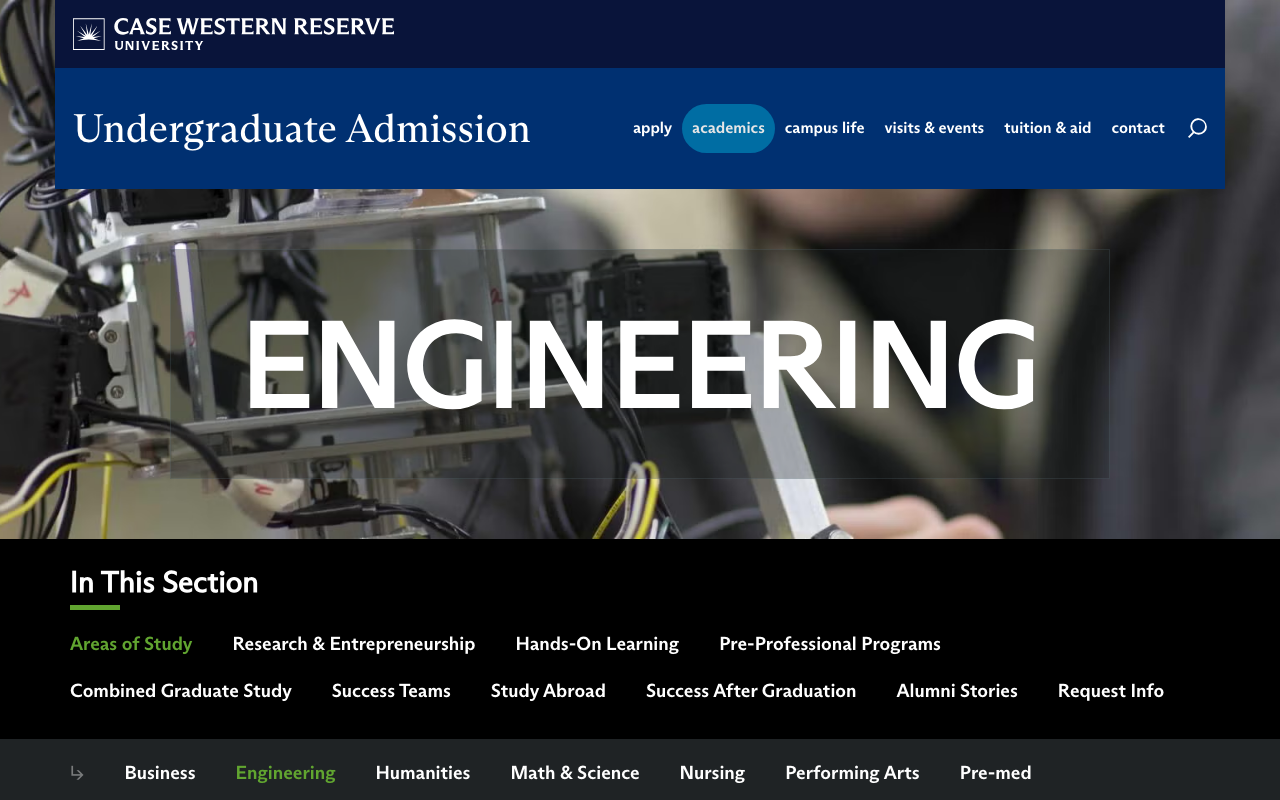
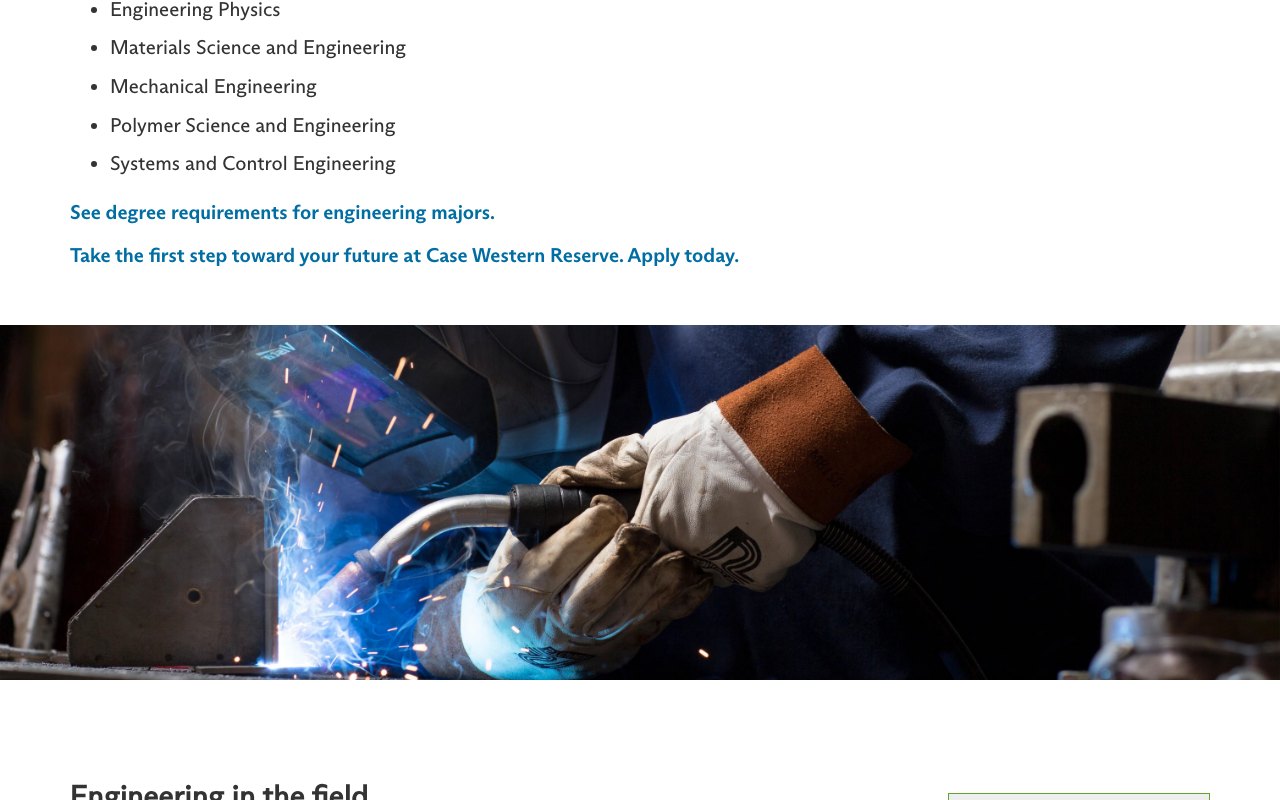
CWRU example: Engineering area of study
Broad, top-of-funnel audience intent.
Strong visual signal and clear topic.
Connect the page more quickly to student questions, proof, outcomes, and next steps.
Make the relationship between CWRU, engineering, research, hands-on learning, and undergraduate pathways unmistakable.
Source: https://case.edu/admission/academics/areas-study/engineering
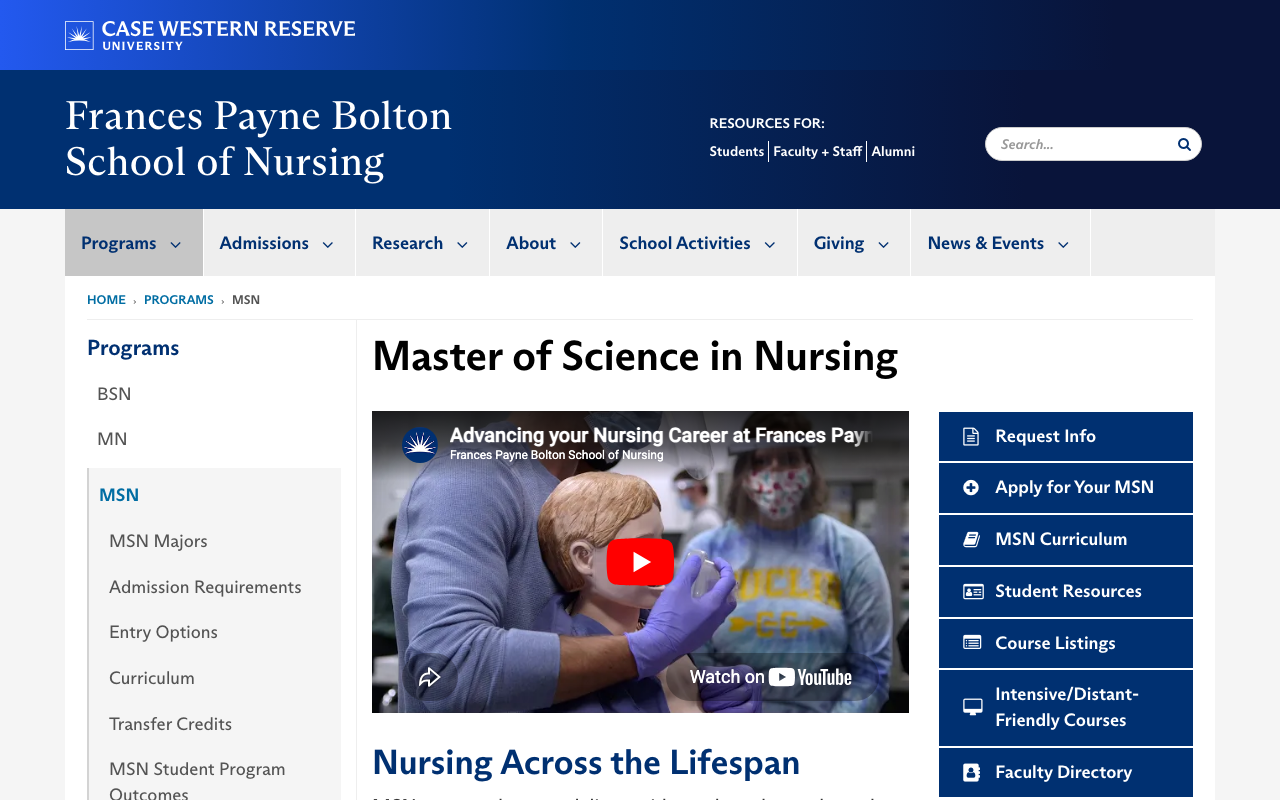
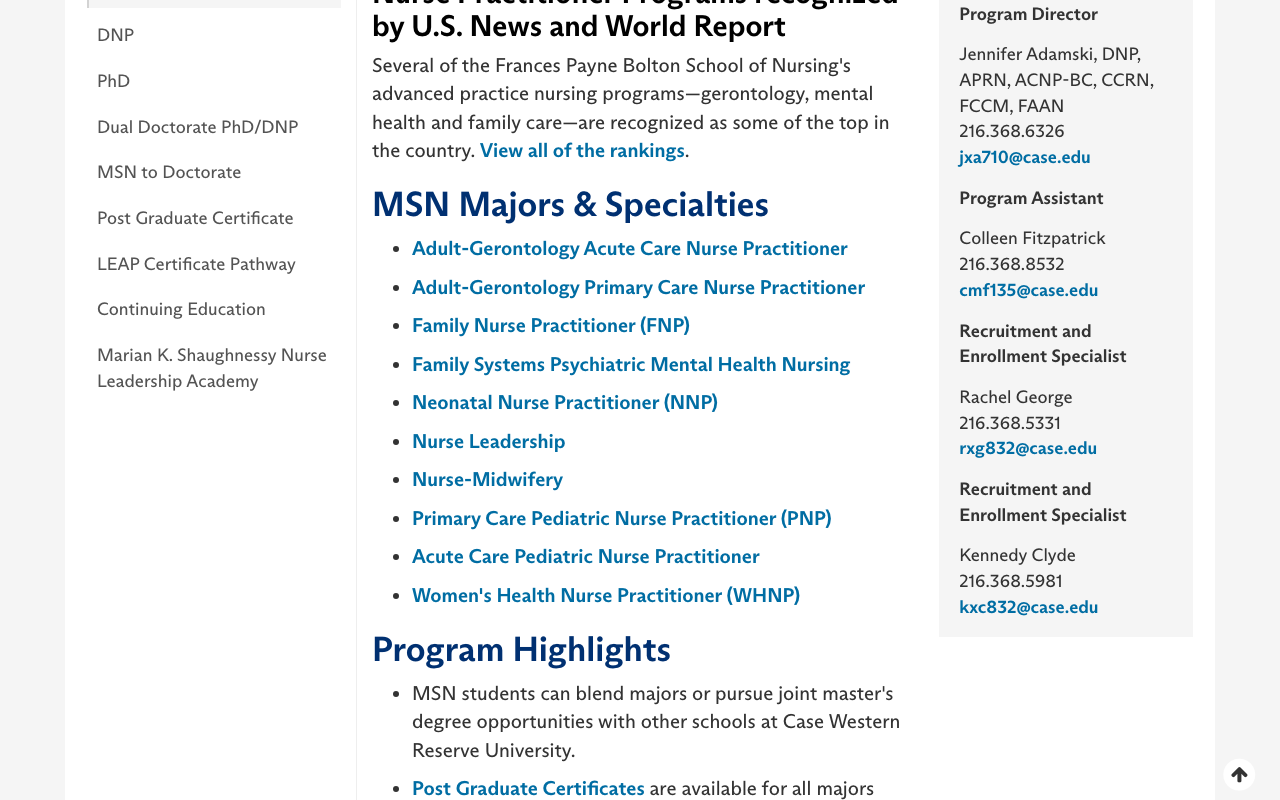
CWRU example: MSN program
Complex program information and conversion clarity.
MSN majors, specialties, recognitions, deadlines, and contacts.
Help scanners understand which path fits them before they hit dense detail.
Use consistent language around Frances Payne Bolton School of Nursing, MSN, nurse practitioner specialties, and recognized program strengths.
Source: https://case.edu/nursing/programs/msn
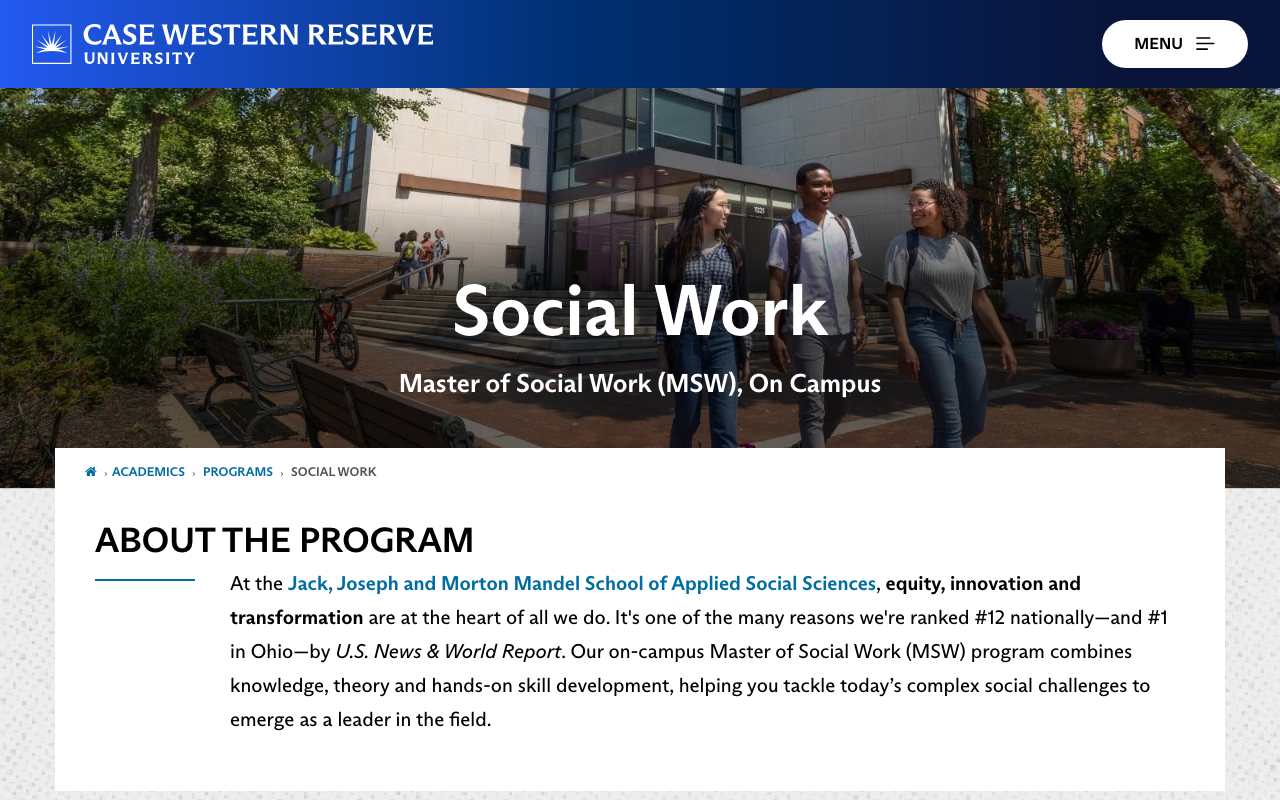
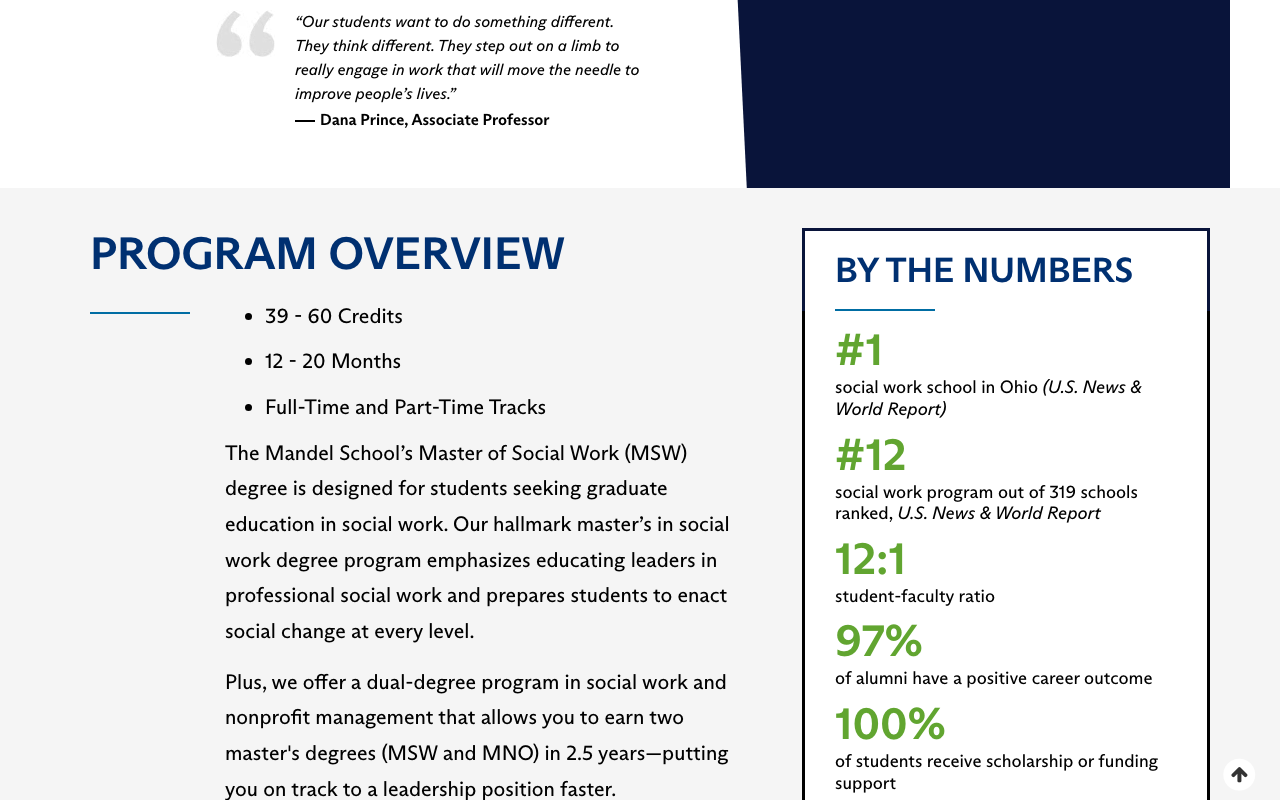
CWRU example: MSW on-campus
Graduate/professional program page with clear admissions and inquiry intent.
Request Information, program overview, numbers, admissions details.
Make the top of page answer fit, format, outcomes, and path faster.
Express who the on-campus MSW is for and what the program prepares them to do.
Source: https://case.edu/programs/socialwork-msw-on-campus
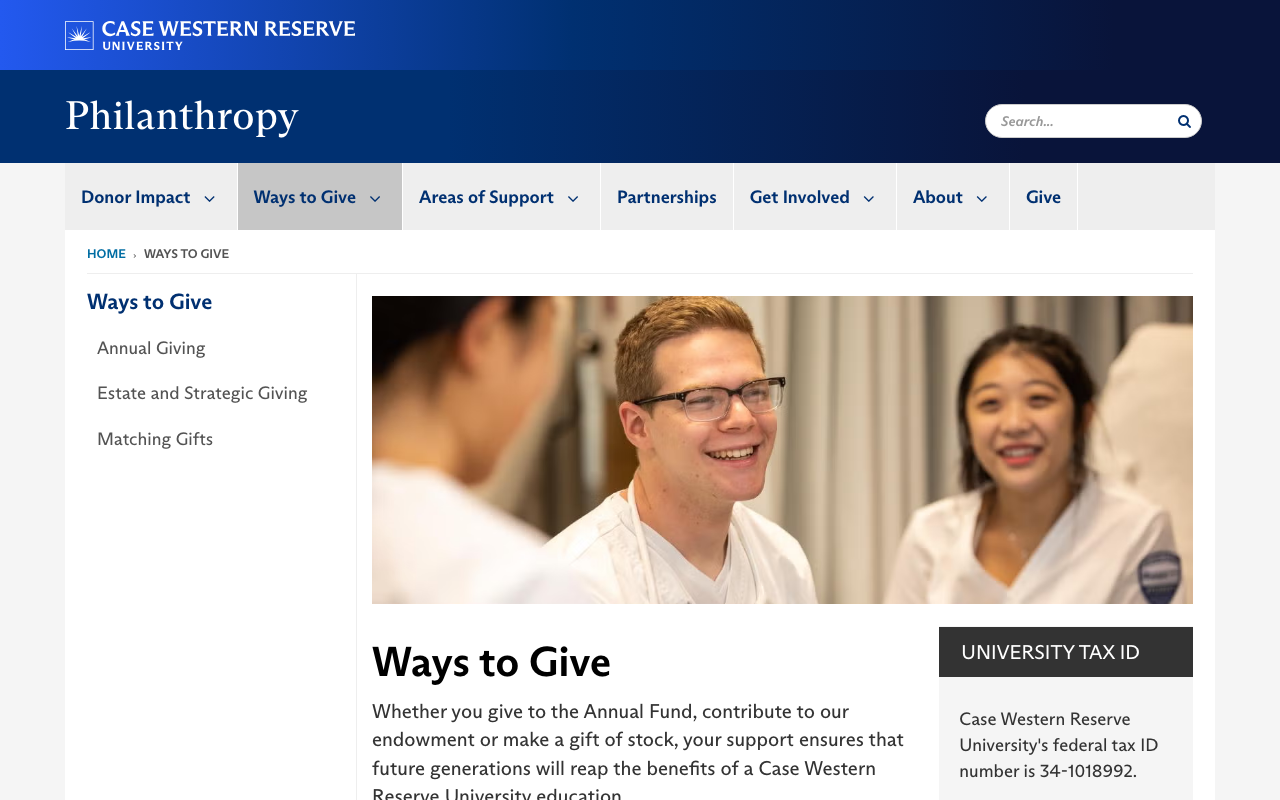
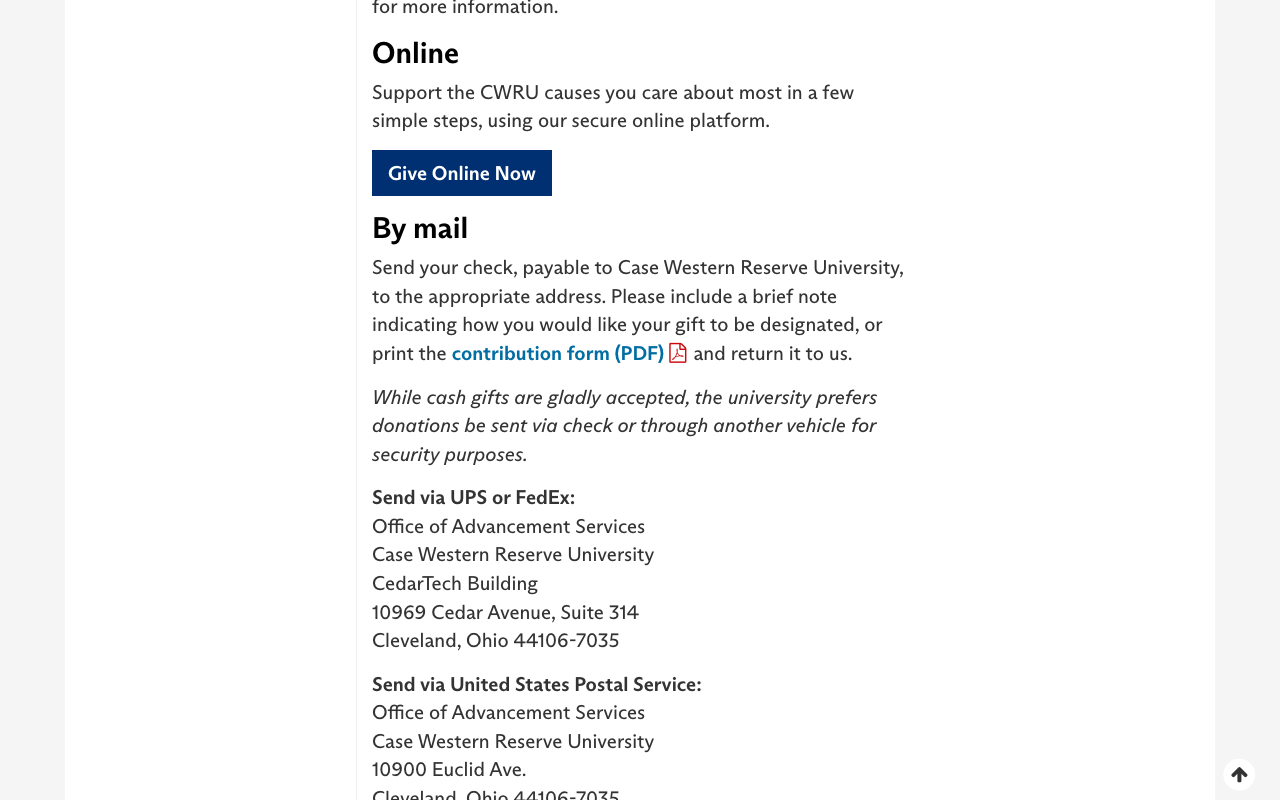
CWRU example: Ways to Give
Task-completion page for donors.
Strong functional list of giving methods.
Pair transaction options with why-give signals, confidence cues, and donor path clarity.
Link and button text should be meaningful when read out of context.
Source: https://case.edu/give/ways-give
Engineering page job statement
This page helps prospective undergraduates and families understand what engineering at CWRU looks like so they can explore programs, hands-on opportunities, and admission next steps.
Does every major section support exploration, confidence, or action?
MSN page job statement
This page helps prospective graduate nursing applicants understand MSN paths, specialties, requirements, and deadlines so they can choose a fit and start an application or inquiry.
Does the page reduce specialty confusion before adding detail?
MSW page job statement
This page helps prospective social work applicants understand the on-campus MSW format, outcomes, requirements, and admissions process so they can request information or apply.
Does the page answer fit and next step before institutional background?
Ways to Give page job statement
This page helps donors choose a giving method and complete the gift confidently while reinforcing why CWRU is worth supporting.
Does the page offer both transaction clarity and donor confidence?
Headings, language, and calls to action
Turn page diagnosis into reusable writing rules participants can apply after the session.
Headings are wayfinding
A reader should understand the page from the headings alone.
Use one clear H1 tied to the page job.
Make H2s answer real reader questions.
Use headings to expose structure, not add decoration.
Heading audit pattern
List the current H1/H2 sequence.
Can a skimmer tell who this page is for?
Does the sequence move from orientation to decision to action?
Fix headings before rewriting paragraphs.
CWRU heading issue to teach
Automated extracts show some pages include navigation headings before content headings.
That is not automatically a content failure, but it is a useful teaching moment.
Content owners should know the difference between visible page structure and CMS/navigation structure.
For AI/search, meaningful content headings still matter because they create retrievable sections.
Better H2 questions for program pages
What can I study here?
Who is this program for?
What will I be prepared to do?
What makes CWRU's version distinctive?
What are the requirements, deadlines, and next steps?
Plain language without flattening expertise
Use precise institutional language where it matters.
Remove internal phrasing that only staff understand.
Prefer direct verbs and specific nouns.
Do not make expert content vague in the name of simplicity.
Exercise: heading-only page read
Read only the H1/H2s. What do you know, and what is still unclear?
10 minutes
CTA clarity
- Learn more
- Click here
- More information
- Multiple equal CTAs competing for attention
- Request information about the MSN program
- Start your application
- Explore engineering majors
- Make a gift online
CTA placement rule
Put the next action near the decision point.
Use the CTA to complete the reader's current task, not the institution's internal funnel label.
If a page has multiple audiences, label the paths clearly.
Do not make readers infer the destination from surrounding copy.
Exercise: CTA rewrite
Make one CTA more specific without making it pushy.
8 minutes
Content-level accessibility
Practical editorial decisions, not a compliance lecture
Accessibility scope for this training
Focus on content decisions the room can control.
Clear link text, useful alt text, meaningful headings, readable tables and lists.
Capture technical/platform questions separately.
Accessibility, usability, and AI-readable clarity often improve together.
Alt text judgment
Useful alt text names the meaningful content of the image.
It fits the page context.
It does not repeat adjacent caption text.
It does not stuff keywords or turn into a marketing paragraph.
When alt text should be empty
Decorative image that adds no information.
Visual flourish already described in nearby text.
Icon with adjacent visible label.
Avoid forcing screen-reader users through irrelevant image details.
When alt text needs more detail
Image conveys unique information.
Chart or infographic includes data not otherwise available.
Photo identifies specific people, places, or moments relevant to the page.
Image is also a link or action trigger.
Link text rule
The destination should be clear if the link text is read by itself.
Avoid repeated 'learn more' links on the same page.
Use button text for actions and link text for navigation where possible.
Specific links help accessibility and page comprehension.
Tables and lists
Use lists for grouped items that do not need row/column relationships.
Use tables only when comparison or data structure matters.
Name columns clearly.
Do not use tables for layout.
Accessibility quick audit
Find three content-level accessibility improvements on a selected CWRU page.
12 minutes
Live page review workshop
Apply the standards to real CWRU pages
Live review method
Show the page before showing the answer.
What is the page job?
What is the first point of friction?
Separate copy fixes, design/CMS issues, and governance questions.
Show a recommended pattern after the room diagnoses.
Page-quality framework
Who is this page for?
What do they need to know?
What proof builds confidence?
What should they do next?
What should search and AI systems understand?
Engineering page diagnosis
Broad and exploratory.
The hero clearly labels Engineering, but the next useful question is student fit and opportunity.
Foreground student pathways, hands-on learning, research participation, and next step.
'Engineering at CWRU combines research, design, and hands-on problem solving from year one.'
Engineering rewrite pattern
Add a short section under the hero: what students can study, how they learn, and where to go next.
Programs, Hands-On Learning, Research and Entrepreneurship, Pre-Professional Paths.
Explore engineering majors / Plan your visit or apply.
Link to makerspace, co-op, and first-year engineering experience with descriptive anchors.
MSN page diagnosis
Nurses comparing specialties and application paths.
The page has rich content, but complexity can overwhelm skimmers.
Add a decision-oriented overview before specialty detail.
'Choose the MSN path that matches your nursing goals.'
MSN rewrite pattern
Lead with who the program is for and how specialty choice works.
Create a 'Compare MSN options' section for majors/specialties.
Move deadlines and request-info/apply actions near the point where applicants are deciding.
Use Frances Payne Bolton School of Nursing, Master of Science in Nursing, and nurse practitioner specialties consistently.
MSW page diagnosis
Request info, overview, numbers, admissions details.
Format, audience, outcome, and next step.
Make the first screen answer 'Is this the right MSW path for me?'
MSW rewrite pattern
Add format, location, audience, and professional outcome.
Use What to Expect, Program Overview, Admissions Details, and Request Information.
Request information about the on-campus MSW.
Use proof sparingly and connect it to applicant decisions.
Ways to Give diagnosis
Multiple giving methods are visible.
The page is functionally useful, but could do more to build donor confidence and motivation.
Pair giving methods with impact context and path confidence.
AI/search is secondary; this is primarily UX writing and accessibility.
Ways to Give rewrite pattern
Add a 'Choose the giving method that works for you' intro.
Use clear link text for each giving option.
Include tax, security, contact, and support details.
Add a 'Why give to CWRU' path that connects philanthropy to outcomes and institutional momentum.
Workshop screenshot: Engineering
What does this section help a prospective student decide?
What is the next student question after seeing these options?
Which links are descriptive enough to work out of context?
What would you change before rewriting any body copy?
Workshop screenshot: MSN
Where does complexity start?
What does a prospective applicant need before choosing a specialty?
Which sections should be scannable summaries vs. detailed explanations?
What facts would AI need to associate with this program?
Workshop screenshot: MSW
What job does this page do well?
Where could the page answer fit and format sooner?
Which CTA language is clear, and which could be more specific?
What proof point belongs near the top?
Workshop screenshot: Ways to Give
Is the giving method list enough?
What confidence cues should donors see?
Which link text would fail if read alone?
Where should motivation and impact live without slowing down the transaction?
Day 1 close
Useful pages begin with purpose.
Structure is not cosmetic; it changes comprehension.
Accessibility, usability, and findability overlap.
The same clarity carries into Day 2, but AI systems interpret it through different mechanisms.
Between-day question capture
Write down one question, one example, or one point of confusion for Day 2.
5 minutes
AI search, semantic clarity, and stronger signals
LLMs are not search engines, but clear web signals still matter
Day 2 agenda
20 minutes
35 minutes
30 minutes
45 minutes
35 minutes
25 minutes
45 minutes
Day 1 to Day 2 bridge
Yesterday was about human comprehension.
Today is about how that same clarity becomes machine-interpretable signal.
AI search does not eliminate SEO or web writing standards.
It raises the cost of vague, inconsistent, disconnected content.
AI search fundamentals
Clarify what changes in AI-assisted discovery before moving into entities, citations, and measurement.
LLMs are not search engines
Retrieve and rank documents.
Generate answers from learned patterns and/or retrieved sources.
May cite sources when the system retrieves supporting material.
Make the facts, entities, relationships, and evidence clear enough to be retrieved, understood, and corroborated.
Search engine vs. large language model
Index, retrieve, rank, snippet, link.
Predict/generate language from model weights and context.
Combines generation with retrieved sources.
A hybrid of retrieval and generation.
How AI answers are sourced
The model answers using learned patterns and may provide no citation.
The model consults external sources and may provide citations.
The grounded layer is the more actionable short-term opportunity.
AMA deck slides on training data vs. grounding.
Google AI Overviews are hybrid
Pulls from Google's index and search-quality systems.
Synthesizes a compressed answer.
Citations often map to pages Google can understand and trust.
'And Google AI Overviews?' from AMA AI Search deck.
What changes for content owners
Keywords still matter, but alone they are not enough.
Entities, relationships, and citations become more important.
Pages need clearer chunks and facts.
External corroboration matters because AI systems recognize patterns across sources.
SEO then and now
- Keywords
- Content
- Links
- Technical health
- Entities
- Semantic relevance
- Citations
- Structured meaning
Source: Source context: AMA 2025 How to Win AI Search, slide 25
The three pillars of SEO for AI search
Help AI recognize your brand, programs, people, places, and topics.
Answer questions, connect topics, and add context.
Build trust through mentions, links, and corroboration across the web.
Source: Source context: AMA 2025 slide 26; UPCEA 2026 slide 17
AI authority is a probability game
Ubiquity increases probability.
The more CWRU's perspective appears clearly across credible sources, the more likely it becomes the pattern AI pulls from.
This is not about spamming the web; it is about consistent, authoritative, corroborated language.
UPCEA 2026 Winning AI Search, slide 16.
Higher-ed search behavior: new baseline
Prospects rely on search engines and university websites.
AI tools are now part of the search journey.
Presence in search engines and AI answers is now a minimum requirement.
CWRU pages have to serve search, site visitors, and AI-assisted discovery.
Source: AI Search in Higher Education: How Prospects Search in 2025, UPCEA & Search Influence
Research data to use in the room
50% of prospects use AI-powered tools at least weekly.
79% read Google AI Overviews.
56% are more likely to trust brands mentioned in AI Overviews.
Use these as orientation stats, not as a reason to abandon web fundamentals.
Source: Source context: AMA 2025 and UPCEA 2026 AI Search decks
AI citations influence trust before the click
AI Overviews and AI answers can shape the consideration set before a student reaches the university website.
The cited or mentioned institution gets an early trust advantage.
This is why CWRU's pages, newsroom, profiles, and external coverage should reinforce the same priority facts.
Visibility is the competitive advantage
You have to be found to be considered.
Differentiation starts with discovery.
Spend as much effort on getting found in AI/search contexts as you spend on what happens after the click.
AMA 2025 AI Search deck, slide 14.
Without SEO, you do not show up in AI
Weak SEO vs. strong SEO.
AI search is not a replacement for organic visibility.
Organic visibility and citation quality are part of the input layer.
Not every AI answer is search-index grounded, but strong public SEO signals still matter.
Current marketing already influences AI search
Program pages
Blog posts and articles
Newsroom
Homepage
Videos
External placements
Social profiles and posts
Directories and profiles
Source: Source context: UPCEA 2026 slide 18; UPCEA webinar slide 30
Entities and semantic clarity
Make the relationship between CWRU and its priority concepts unmistakable
What is an entity?
A named person, place, organization, program, topic, credential, or concept.
Case Western Reserve University, Frances Payne Bolton School of Nursing, Master of Science in Nursing, Cleveland, AAU, research expenditures.
AI systems use entities and relationships to infer what content is about.
CWRU entity map
Case Western Reserve University.
School of Medicine, Case School of Engineering, Frances Payne Bolton School of Nursing, Mandel School.
MSN, MSW, engineering areas of study.
Research growth, biomedical innovation, hands-on engineering, professional education.
Cleveland, Ohio, AAU.
Semantic triples
Subject -> Predicate -> Object.
Case Western Reserve University offers undergraduate engineering programs connected to research and hands-on design.
Frances Payne Bolton School of Nursing offers MSN majors and specialties for nurses advancing clinical practice.
Use triples as an editing tool, not as visible jargon for every page.
Program boilerplate pattern
[School] offers [program] for [audience] who want [outcome].
Good boilerplate can be used in program pages, newsroom context, social copy, and PR talking points.
Keep the language factual and consistent; do not make every page invent a new description.
Engineering semantic boilerplate
Case Western Reserve University offers undergraduate engineering programs for students who want hands-on design, research, entrepreneurship, and technical problem solving in Cleveland.
Use consistently across area-of-study, admissions, research, and news contexts where appropriate.
MSN semantic boilerplate
Frances Payne Bolton School of Nursing at Case Western Reserve University offers Master of Science in Nursing pathways and specialties for nurses preparing for advanced clinical, leadership, and specialty roles.
Use to connect program detail, school reputation, and applicant outcomes.
MSW semantic boilerplate
Case Western Reserve University's on-campus Master of Social Work prepares students for social work practice through graduate study, field education, and community-connected learning.
Use to connect audience, credential, format, and outcome.
Ways to Give semantic boilerplate
Case Western Reserve University's giving options help alumni, friends, and partners support students, research, faculty, programs, and institutional priorities.
Use to connect transaction paths to impact and authority signals.
Content chunks AI can retrieve
Definition or plain-English summary.
Program or page facts.
Eligibility/requirements/deadlines.
Outcomes and proof.
FAQs or decision-support sections.
Internal links to authoritative related pages.
Exercise: entity mapping
What should this page make unmistakably clear to AI systems?
12 minutes
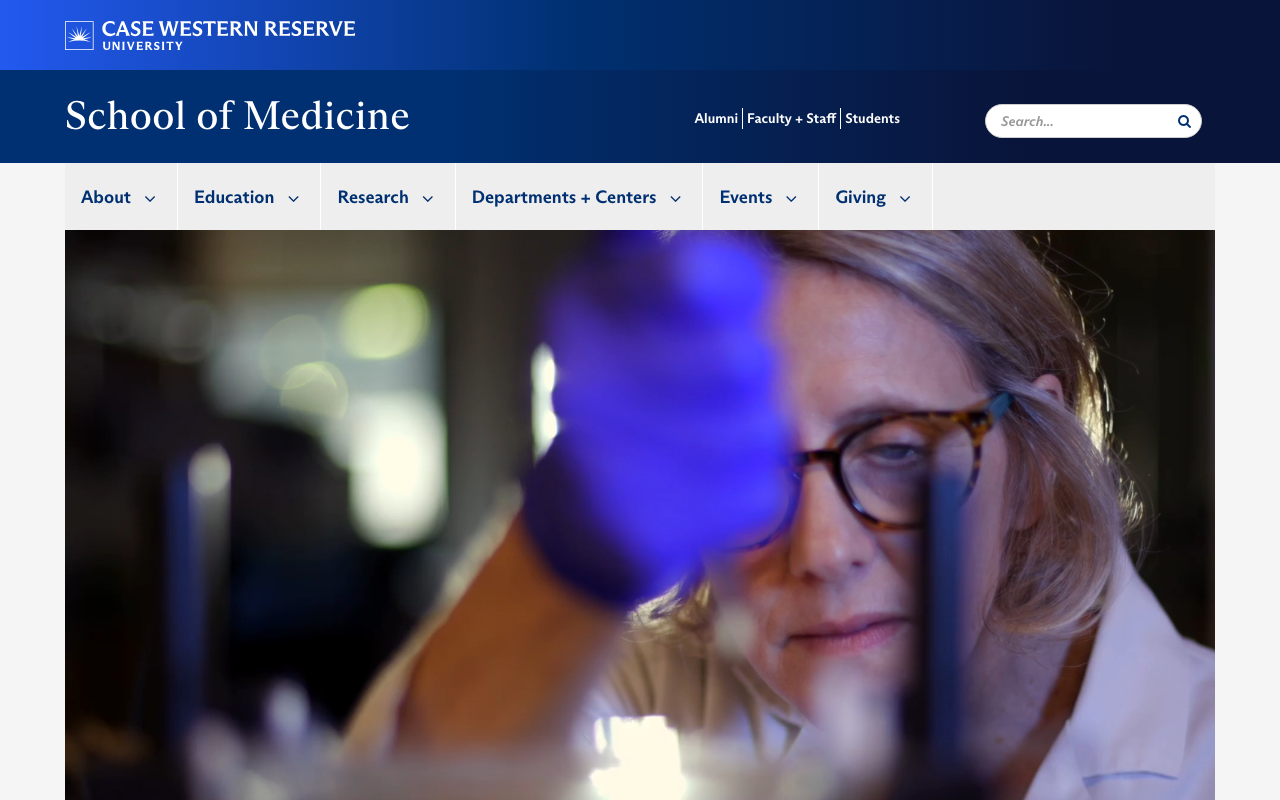
CWRU entity example: School of Medicine
School-level hub that should connect education, research, clinical expertise, people, and news.
Make entity relationships explicit through headings, summaries, internal links, and consistent boilerplate.
What should AI understand about this school after reading only the top-level page?
Source: https://case.edu/medicine/
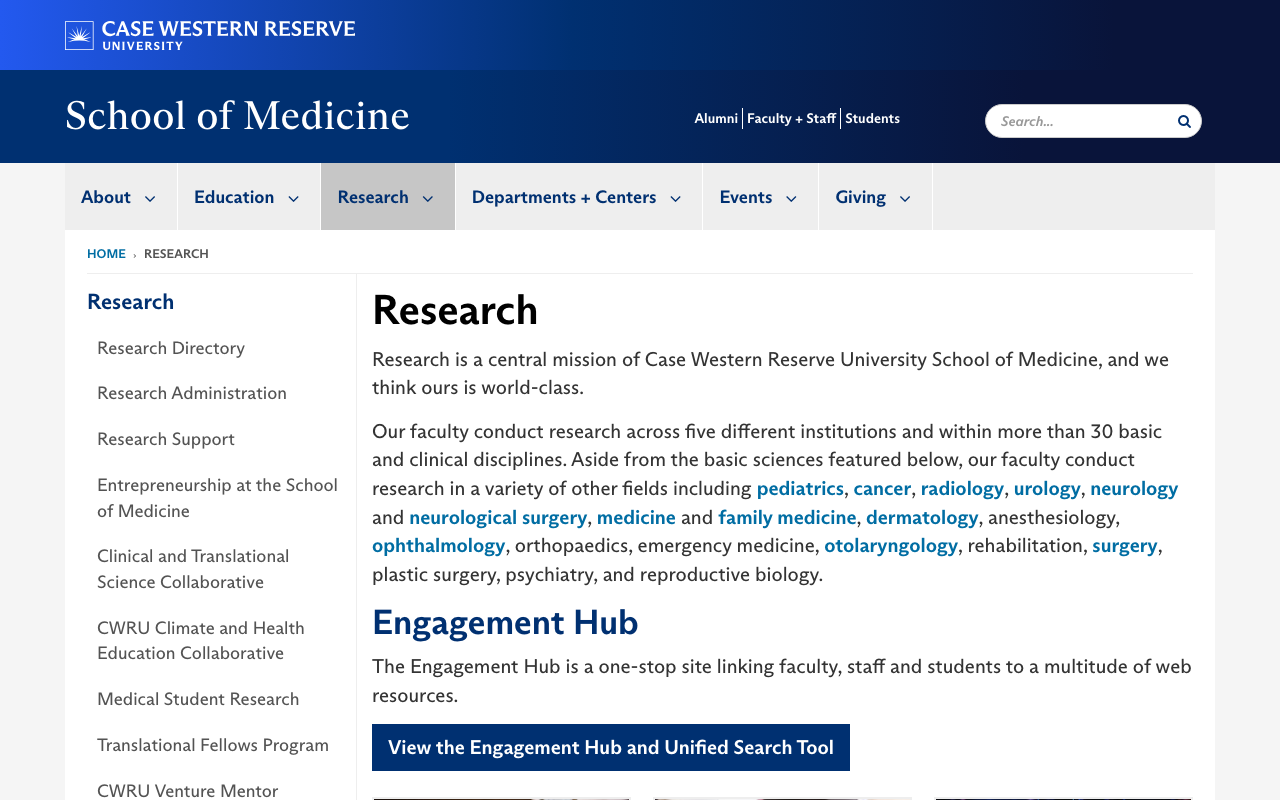
CWRU entity example: Medicine Research
Research hub as institutional authority signal.
Connect research themes to faculty, centers, grants, news, programs, and Cleveland/healthcare context.
Which topics should this page make CWRU known for?
Source: https://case.edu/medicine/research
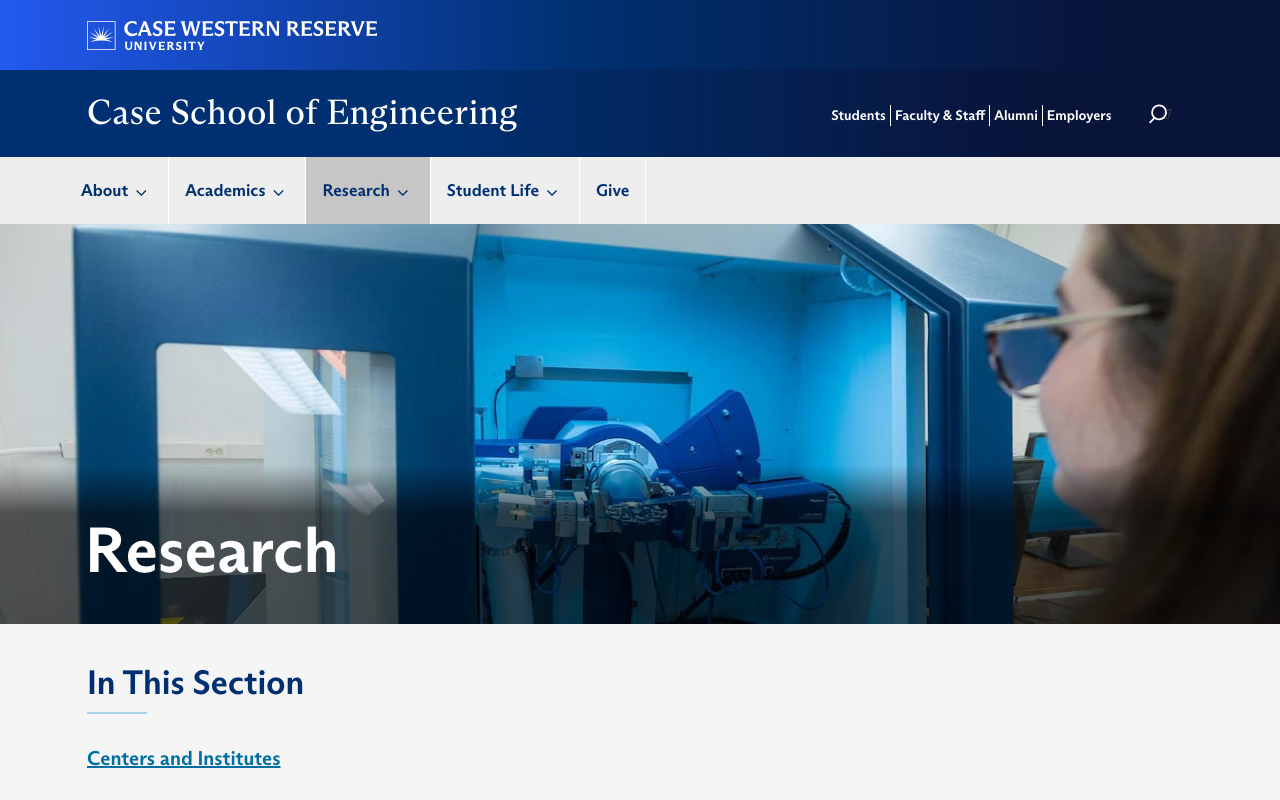
CWRU entity example: Engineering Research
Research hub with clear authority and internal-link potential.
Connect 'Boundless Ideas,' departments, centers, institutes, experiential learning, and headlines into a clearer knowledge graph.
Design and CMS dependencies should be captured separately from content edits.
Source: https://case.edu/engineering/research
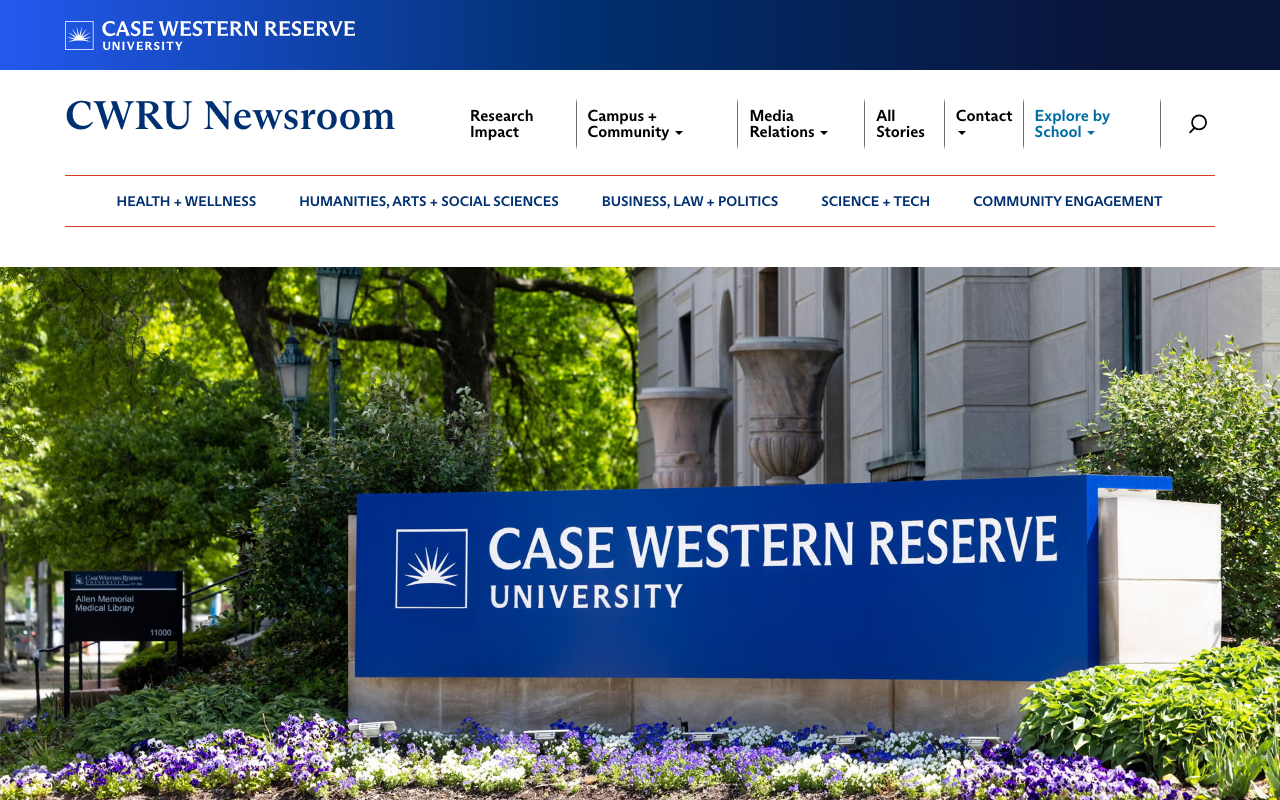
Newsroom and external signals
CWRU's authority is reinforced beyond program pages
Why newsroom belongs in AI-search training
Newsroom stories connect people, topics, discoveries, gifts, rankings, research, and institutional momentum.
They often become the source material for external coverage.
They can corroborate what program and school pages claim.
They give AI systems repeated patterns around what CWRU is known for.
Newsroom language should connect dots
Name the institution consistently.
Name the school, department, faculty, program, topic, and partner when relevant.
Explain why the story matters to audiences beyond campus.
Use boilerplate intentionally so external pickup carries the right facts.
External corroboration
A CWRU page says what CWRU says about itself.
External pickup says other sources recognize or repeat the claim.
AI systems often reward patterns repeated across credible sources.
This is why PR, newsroom, and SEO should not be separated in the AI-search conversation.
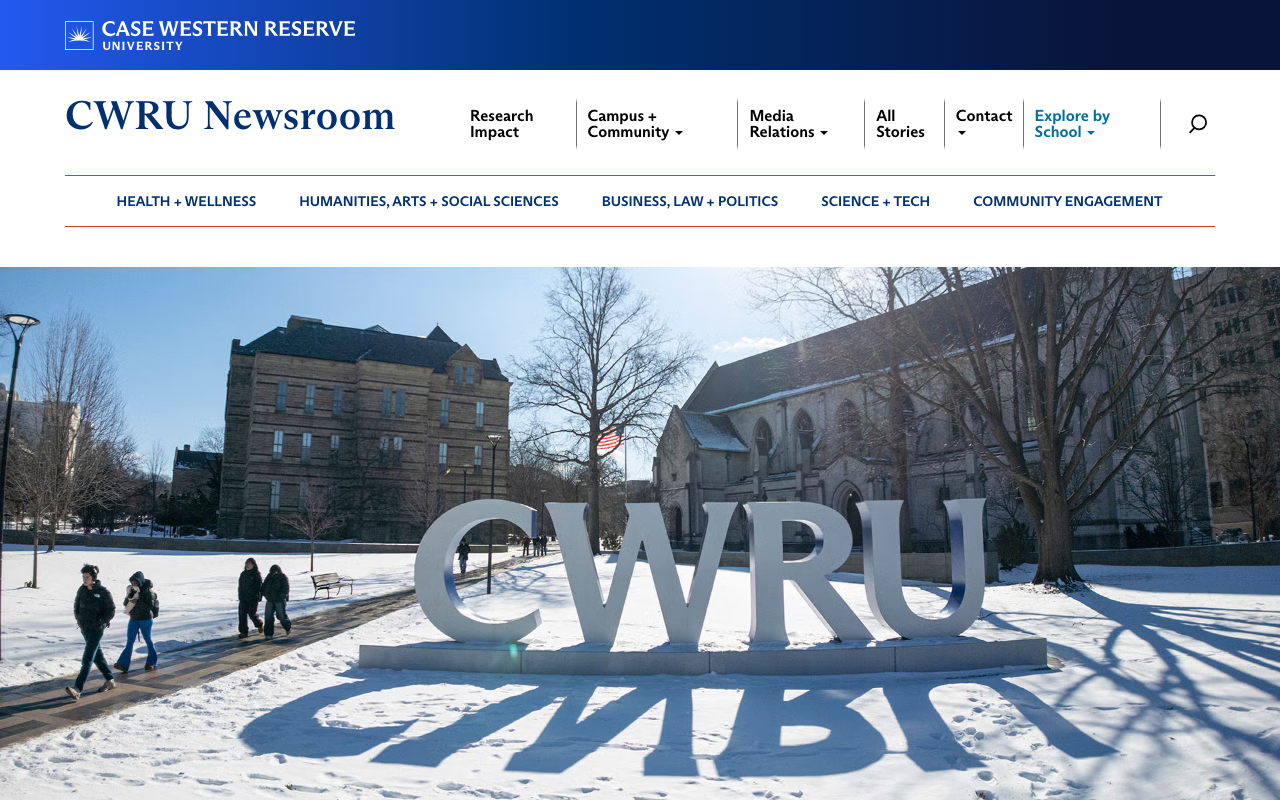
Official story: fastest-growing AAU research university
Official source for institutional authority.
CWRU frames itself as the #1 fastest-growing research university in the AAU.
Connect this claim to school research pages, faculty expertise, graduate programs, and external pickup.
Keep date/source context visible for ranking and research-expenditure claims.
Source: https://case.edu/news/cwru-now-1-fastest-growing-research-university-aau
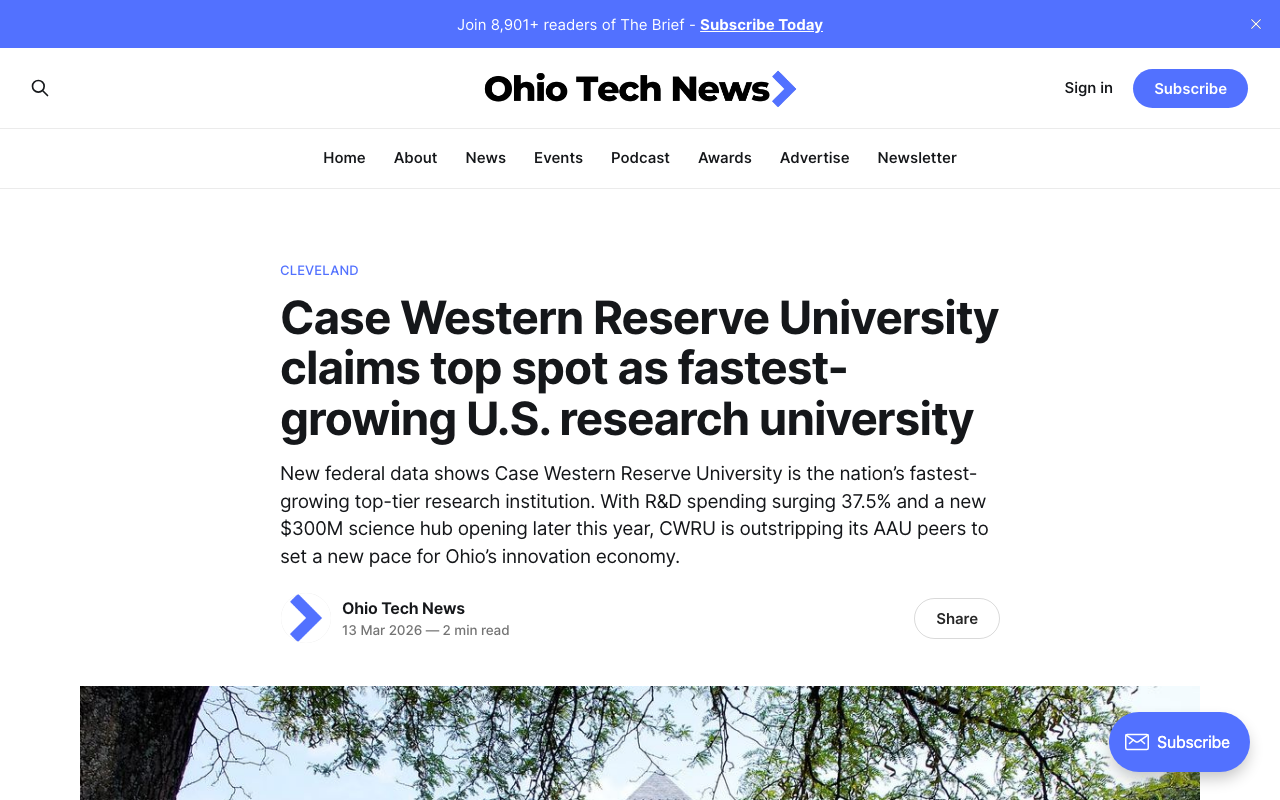
External pickup: Ohio Tech News
Official CWRU story becomes third-party sector coverage.
This is a concrete example of external corroboration.
What phrases, facts, and entity links from CWRU's original story made it into external coverage?
Use as a discussion about consistent language, not as a press-release lecture.
Source: Ohio Tech News coverage of CWRU research-growth story
Ranking story: use with date context
Reputation proof and context management.
Ranking stories can support authority, but they age and may include updates/corrections.
Visible date, source, and context should stay attached to claims.
Stale or ambiguous claims can be repeated without nuance.
Source: https://case.edu/news/case-western-reserve-university-named-among-worlds-top-universities-time
External distribution example: EurekAlert
External distribution and institutional boilerplate.
Even when the page blocks text extraction, the slide can discuss distribution surfaces and press-release pickup.
Every external release should carry clean entity language about CWRU, the gift/story, people, school/unit, and institutional priorities.
Source: https://www.eurekalert.org/news-releases/1126599
PR and media best practices for AI search
Consistent verbiage used in each release or talking points about the university, program, or priority topic.
Use the same factual description across newsroom, program page, social, and external pitch materials.
Include the institution, school, program, people, location, topic, credential, audience, and outcome.
UPCEA webinar slide on PR and media best practices for AI search.
Where CWRU can build citations
Online directories that are industry, topic, or locally relevant.
Sponsored or contributed content where appropriate and labeled.
Media mentions from local, regional, national, and sector publications.
Thought leadership interviews, podcasts, webinars, and conference pages.
Faculty and program profiles on authoritative third-party sites.
Source: Source context: AMA 2025 slide 41; UPCEA 2026 slide 55
Supportive and derivative content
LinkedIn posts and articles can reinforce program/faculty/newsroom language.
YouTube/video transcripts create another AI-readable surface.
Blog and newsroom summaries can point back to program/research pages.
The point is not volume; the point is consistent, useful, corroborated signals.
Source: Source context: AMA 2025 slides 37-38
How to address inaccurate AI answers
Ask AI for its sources.
Google the claim to find likely source pages.
Search CWRU's own site for outdated or conflicting language.
Fix the owned source first, then reinforce with stronger external signals.
Source: Source context: UPCEA webinar slide 36
Tools and measurement
Use tools to find gaps, not to outsource judgment
Tool categories to consider
AI visibility tools
Technical/site-quality crawlers
Accessibility and content-quality tools
SEO research platforms
Brand/reputation monitoring
Approved internal AI access, if available
Measurement caveat
AI visibility tools are directional.
One platform is not the whole truth.
Prompt wording changes results.
Use tools to find page priorities and citation gaps, then apply editorial judgment.
GA4 AI referral traffic
Which AI tools drive traffic?
Which pages are clicked from AI citations?
How much is AI referral traffic growing?
How engaged are AI-referred visitors?
AMA 2025 slide 47.
Google Search Console question queries
Question-style queries show what users ask before they reach the page.
Use regex/query filters for what, why, who, how, where, when, can, and should terms.
Turn question patterns into headings, FAQs, and page sections.
AMA 2025 slide 48.
Prompt visibility checks
Prompt around priority audiences and real decision moments.
Record whether CWRU is mentioned, cited, absent, or misrepresented.
Capture the sources AI uses.
Turn findings into page edits, citations, or newsroom/PR priorities.
Using tools without losing judgment
The tool should support the content decision, not become the focus.
Use one CWRU prompt cluster and one page example when a live demo is appropriate.
Show result, cited sources, missing entities, and recommended page action.
Use examples that keep the discussion focused on findings and next actions.
Priority workshop and next steps
Turn examples into standards CWRU can carry forward
Priority matrix
Page/content issue.
Impact, effort, owner, next action.
Separate page edits, governance questions, and external-signal work.
Pull from live examples discussed across both days.
Quick wins
Rewrite vague H2s into reader questions.
Replace repeated 'learn more' links with descriptive links.
Add page job statements to priority pages before editing.
Add short summary/fit blocks to complex program pages.
Standardize program/school/entity boilerplate.
Reusable rules
Every page has one primary job.
Headings should orient a skimmer.
CTAs should name the action or destination.
Alt text should fit the image's page context.
Priority entities should be named consistently across pages and external materials.
Owner decisions
Which team owns program boilerplate?
Which pages get edited first?
What needs CWRU brand/legal/accessibility review?
Which newsroom patterns should be standardized?
What can be handled in CMS now vs. future redesign work?
What not to overcomplicate
Do not turn every page into an AI page.
Do not keyword-stuff alt text or headings.
Do not chase every prompt variation.
Do not create content only because a tool surfaced a gap.
Do not hide the human reader behind machine optimization.
Post-training recommendations
1-3 page written summary.
Top examples discussed.
Recommended standards or governance changes.
Open questions and dependencies.
Priority next steps with owners where known.
Recommended follow-up work
Optional deeper diagnostic for one school/program/content cluster.
AI visibility baseline across selected prompt clusters.
Program-page rewrite direction for priority areas.
Newsroom/PR boilerplate and citation strategy.
Governance support for distributed content standards.
Final exercise: fix, standardize, leave alone
For one CWRU page, decide what to fix now, what to standardize, and what to leave alone.
15 minutes
Participant takeaway
Use the page-quality framework before editing.
Use real reader questions as headings.
Make important entities and relationships explicit.
Connect program, school, newsroom, and external signals.
Let AI-search tactics sharpen editorial judgment, not replace it.
Closing discussion
What changed in how you read your own pages?
What one rule should CWRU standardize first?
Which page or content type needs the fastest follow-up?
What question should be answered in the written recommendations?
Thank you
Web Writing + AI Search Training
Search Influence
June 9-10, 2026